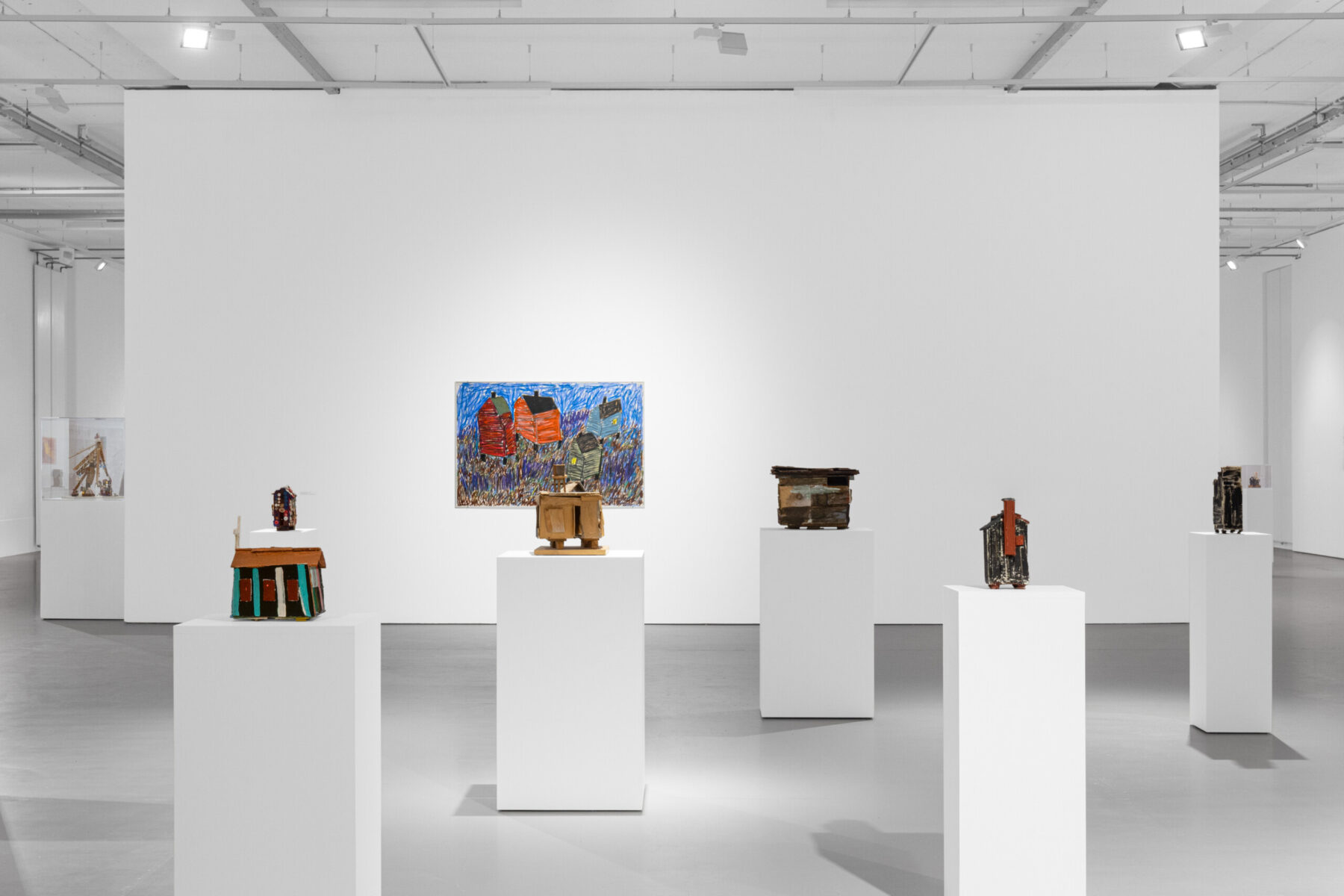
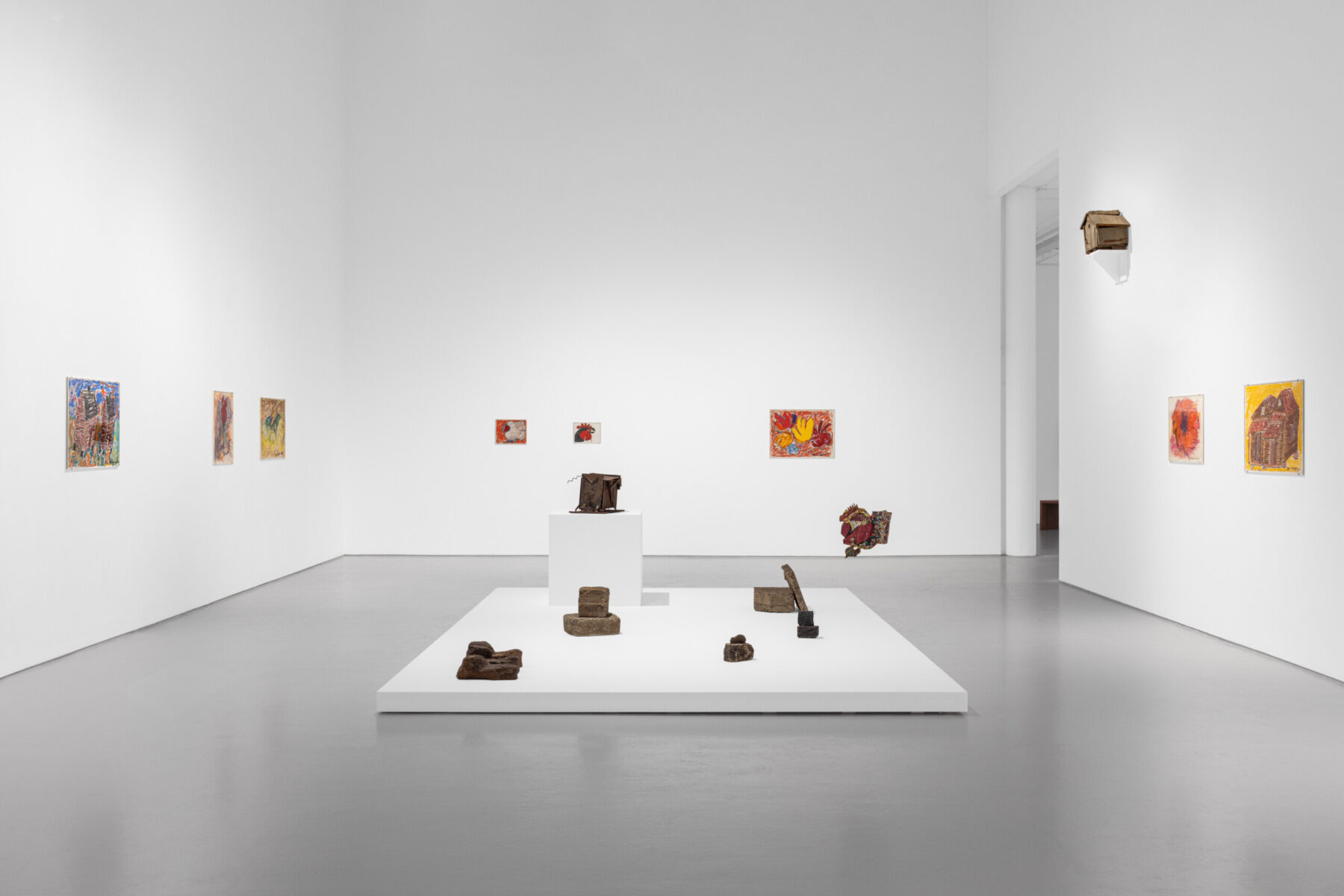
Installation view: Beverly Buchanan, Weathering (2026), Spike Island, Bristol. Photo: Arthur Gray.
Courtesy Spike Island. © Estate of Beverly Buchanan/Jane Bridges, 2026.
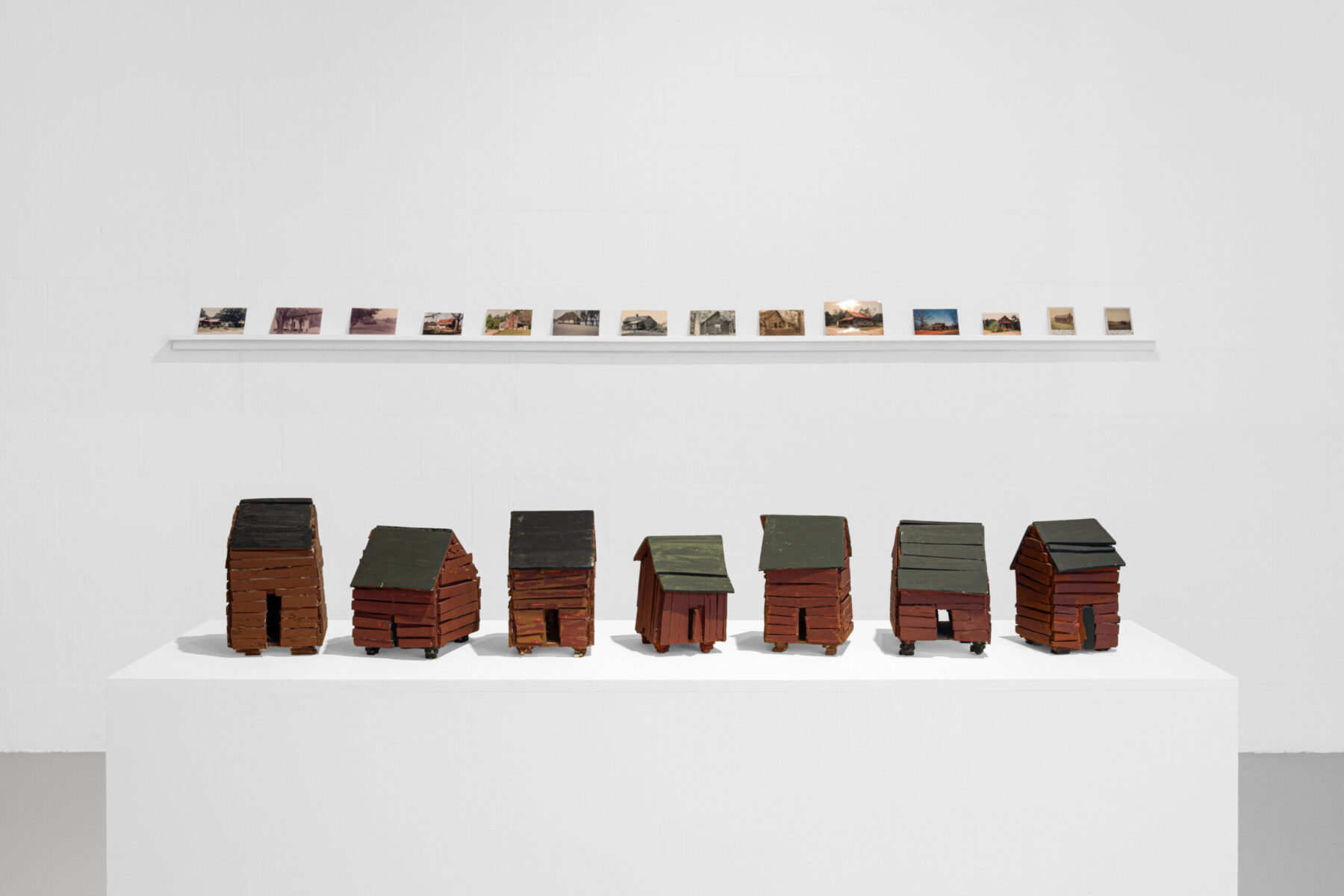
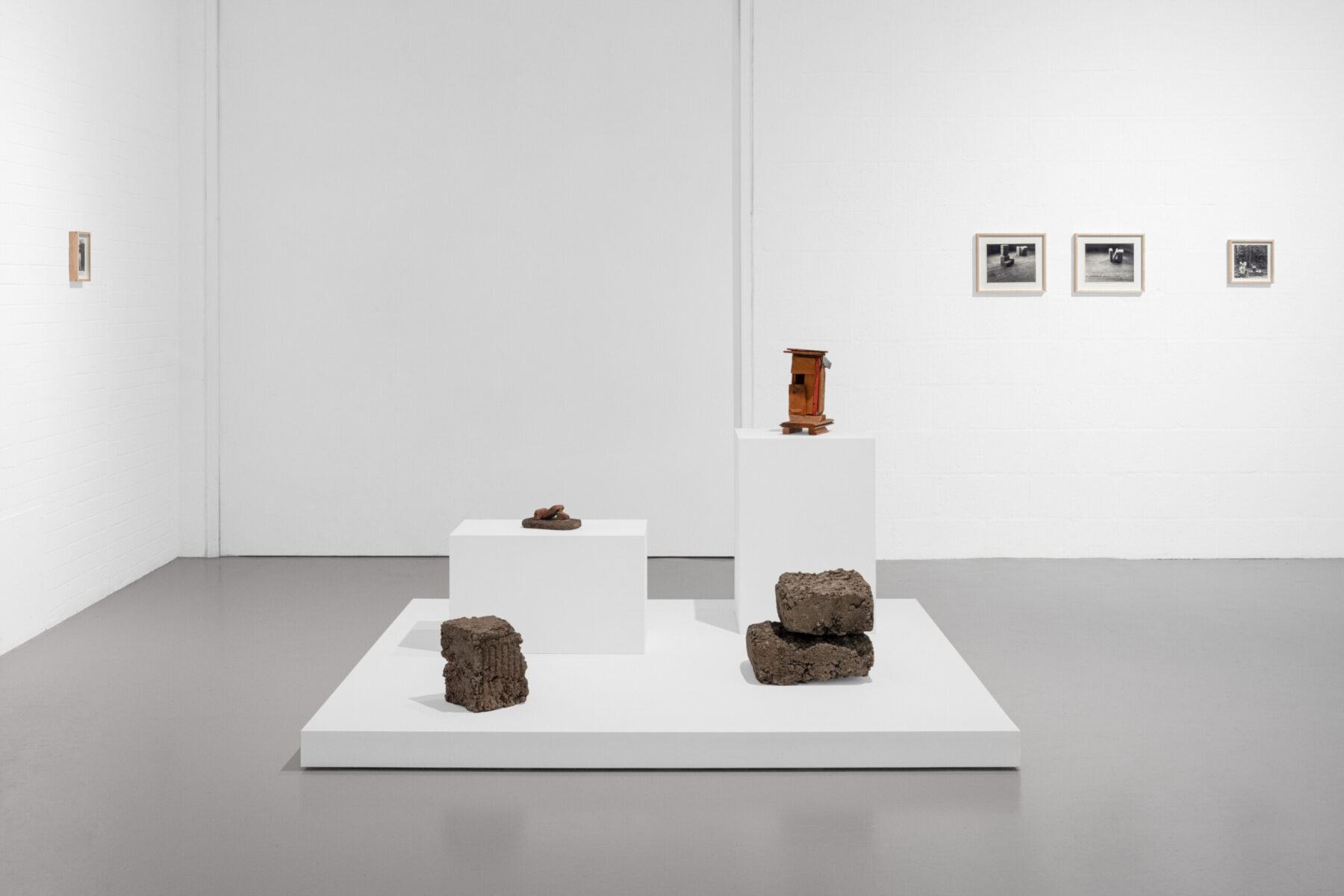
Installation view: Beverly Buchanan, Weathering (2026), Spike Island, Bristol. Photo: Arthur Gray.
Courtesy Spike Island. © Estate of Beverly Buchanan/Jane Bridges, 2026.
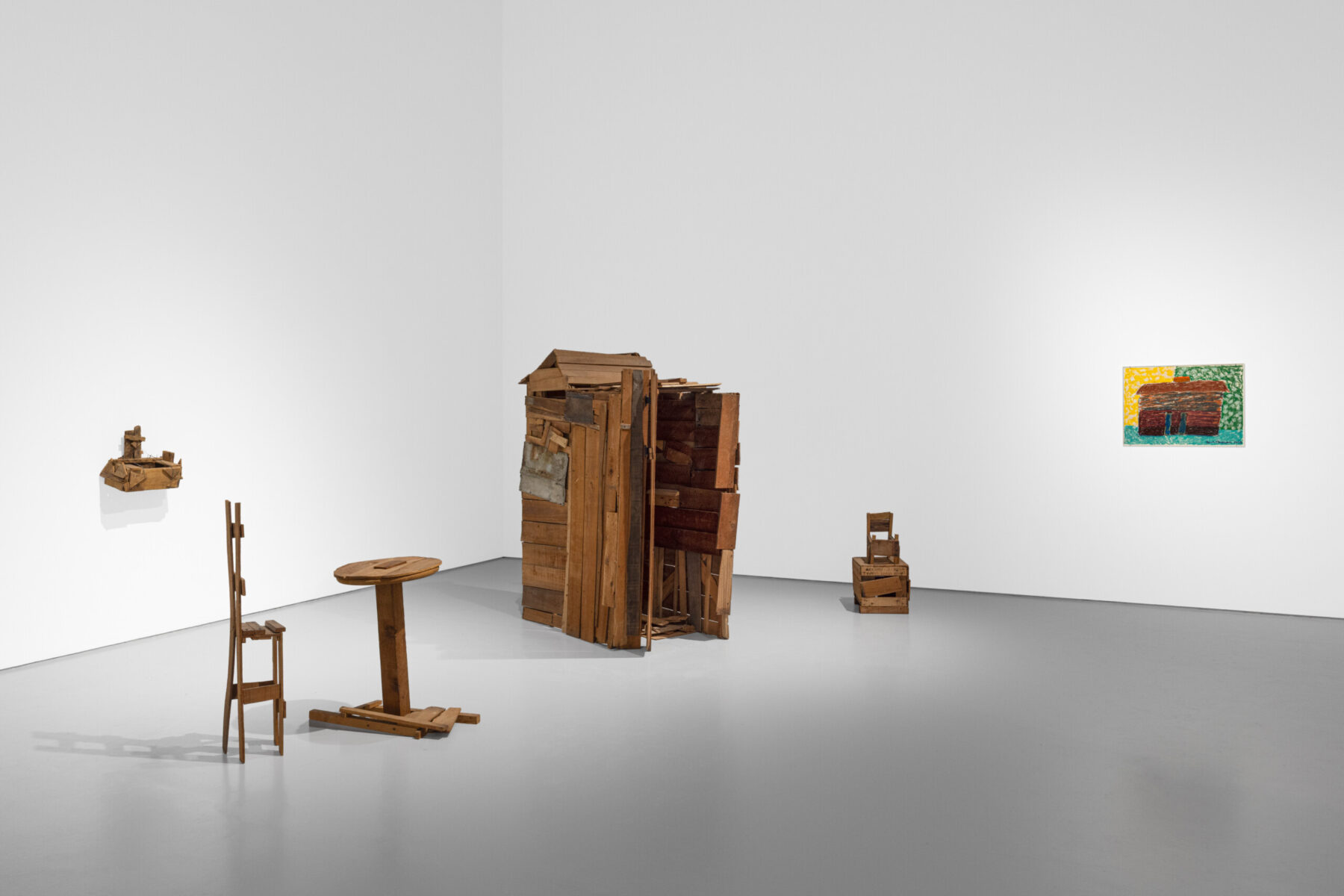
Installation view: Beverly Buchanan, Weathering (2026), Spike Island, Bristol. Photo: Arthur Gray.
Courtesy Spike Island. © Estate of Beverly Buchanan/Jane Bridges, 2026.
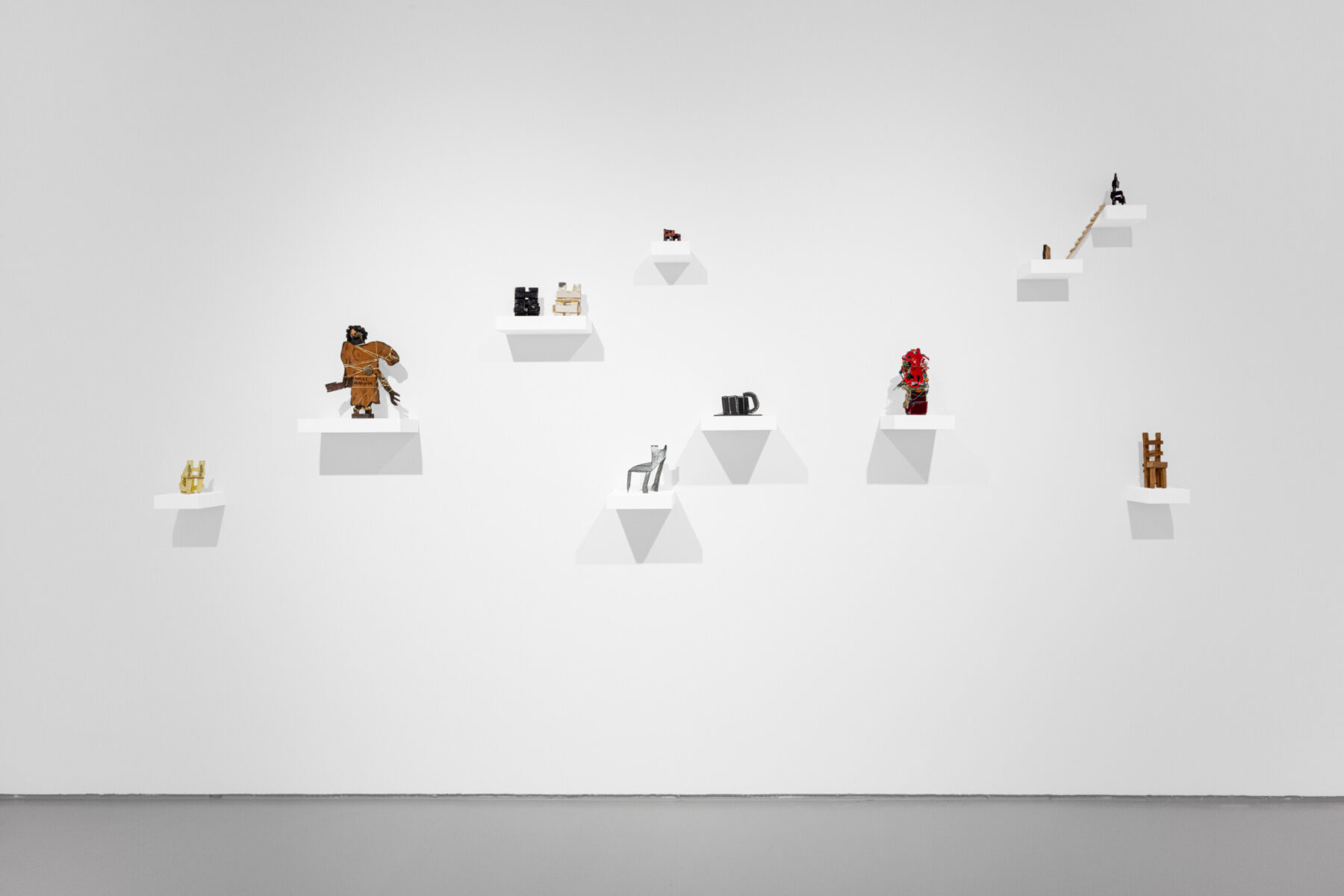
Installation view: Beverly Buchanan, Weathering (2026), Spike Island, Bristol. Photo: Arthur Gray.
Courtesy Spike Island. © Estate of Beverly Buchanan/Jane Bridges, 2026.
Installation view: Beverly Buchanan, Weathering (2026), Spike Island, Bristol. Photo: Arthur Gray.
Courtesy Spike Island. © Estate of Beverly Buchanan/Jane Bridges, 2026.
Installation view: Beverly Buchanan, Weathering (2026), Spike Island, Bristol. Photo: Arthur Gray.
Courtesy Spike Island. © Estate of Beverly Buchanan/Jane Bridges, 2026.
Spike Island presents the first European survey exhibition of the work of Beverly Buchanan (b.1940; d.2015), bringing together four decades of sculpture, painting, drawing, earthworks, artists’ books and rarely-seen archival material. Rooted in the landscapes and histories of the American Southeast, Buchanan developed a singular practice shaped by memory, materiality and place, exploring the enduring legacies of slavery through the histories embedded in architecture, landscape and everyday materials.
Throughout her career, Buchanan returned to structures as repositories of lived experience and historical memory. She began her artistic career in New York City in the early 1970s, studying with Norman Lewis at The Art Student’s League, while working with communities as a public health educator in the Bronx and East Orange, New Jersey. Abstraction became her first visual language, inspired by the weathered surfaces of derelict buildings in the city. What Buchanan described as the ‘aesthetic qualities of decay’ informed her early series of Wall paintings (c.1975–77), first vividly coloured and later almost exclusively black. Like the site-specific environmental works she would later realise upon her return to the South, these paintings responded to the landscapes they inhabited and the histories they held.
Buchanan embraced impermanence as both a material process and a political proposition. Constructed from concrete blocks or tabby and left exposed to the elements, her sculptural earthworks, such as Marsh Ruins (1981), slowly weather and recede into their surroundings. Quietly imposing rather than visibly commemorative, they honour African American lives and histories through persistence and contemplation rather than spectacle. Her sustained attention to material vulnerability and transformation reveals a profound engagement with both a personal and historical consciousness of survival and resilience, legibility and concealment.
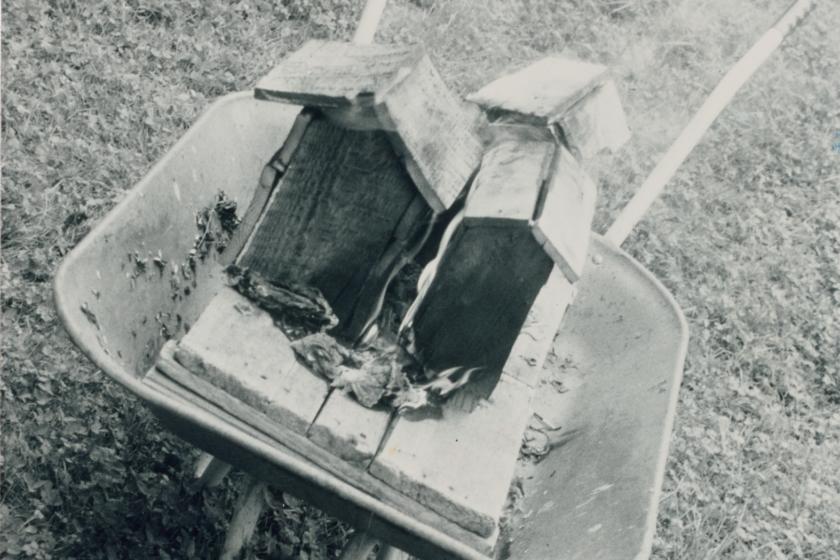
Equally central are Buchanan’s celebrated shack sculptures (c.1985–2005), inspired by the vernacular architecture of the American South. Assembled variously from cardboard, foam core, recycled wood, steel and a multitude of other found materials, these intimate yet powerful works draw on the kinds of structures she first encountered during childhood journeys with her father, then the Dean of Agriculture at South Carolina State College, when he visited the homes of Black tenant farmers and sharecroppers. Buchanan not only studied these hand-built homes, shanties and shotgun houses, but also their builders and occupants. By the early 1990s, she understood her shack sculptures as forms of portraiture; many are accompanied by short stories, which she referred to as ‘legends’, that give voice to a cast of characters both real and imagined. As Buchanan elaborated, ‘I want to give people who can neither read nor write but made all the measurements and built their own barns and shacks a different way of looking at themselves.’ The exhibition also includes many drawn and photographed depictions of shacks, which similarly detail the precarity and ingenuity of these vernacular forms while pointing to the contours of structural violence and inequality that continue to shape the South.
Buchanan’s practice was crucially sustained by networks of care and solidarity. As a Black queer woman living with chronic illness, she cultivated communities of friendship and mutual support that were integral to both her life and artistic practice. These relationships shaped not only the conditions under which she worked, but also the generosity and openness that characterise much of her output.
This exhibition foregrounds the intimate forms through which Buchanan nurtured these relationships, alongside major works spanning the 1970s to the 2010s. Artists’ books, manifestos, small sculptures and her witty, affectionate Christmas cards reveal a practice that moved fluidly between the monumental and the personal. Buchanan’s writing—by turns incisive, humorous and deeply reflective—runs throughout the exhibition, offering insight into her artistic thinking as well as her daily life, ambitions and struggles.
Buchanan’s influence on younger generations of artists has long exceeded the institutional recognition her work received during her lifetime. Acknowledging this legacy, the exhibition includes a new commission by London-based artist Phoebe Collings-James (b.1987), whose practice has been shaped by a longstanding engagement with Buchanan’s work. Developed in dialogue with the exhibition, the commission extends Buchanan’s influence into the present, highlighting the continued resonance of her ideas across generations and geographies.
Beverly Buchanan
Beverly Buchanan (b. Fuquay, North Carolina, 1940 – d. Ann Arbor, Michigan, 2015) was an American artist who explored the relationship between memory – personal, historical, and geographical – and place. Her work encompasses painting, sculpture, video, photography, poetry, and environmental installations.
Her work has been exhibited in solo presentations at The Athenaeum, University of Georgia; Georgia Museum of Art, Athens, GA; Frac Lorraine, Metz (2026); Haus am Waldsee, Berlin (2025); gta exhibitions, ETH Zurich; Fisk University Galleries, Nashville, TN (2024); Spelman Fine Art Museum, Spelman College, Atlanta, GA (2017); Brooklyn Museum of Art, NY (2016), Macon Museum of Arts and Sciences, GA (2014, 1990); N’Namdi Center for Contemporary Art, Detroit, MI (2012); Asheville Art Museum, NC; Morris Museum of Art, Augusta, GA (2009); Art Museum of Missoula, Missoula, MT (1997); Tubman African American Museum, Macon, GA (1996); The Montclair Museum of Art, Montclair, NJ; Museum of African American History, Detroit, MI; The Sidney Mishkin Gallery, Baruch College, New York, NY; Smith College Art Museum, Northampton, MA; Delaware Art Museum, Wilmington, DE; Columbia Museum of Art, Columbia, SC; Sharadin Art Gallery, Kutztown University, Kutztown, PA; Edison Community College Gallery of Fine Art, Fort Meyers, FL; Brenau University Galleries, Gainesville, GA; Chattahoochee Valley Art Museum, LaGrange, GA (1994-1996); A.I.R. Gallery, New York City, NY (1980); Cinque Gallery, New York City, NY (1975, 1972), among others.
The winner of numerous honors during her long career, including the John Simon Guggenheim Memorial Foundation Fellowship and the National Endowment for the Arts Fellowship, Buchanan’s work is in the permanent collections of the High Museum of Art, Atlanta, the Metropolitan Museum of Art, the Studio Museum in Harlem and the Whitney Museum, among others.
Partners and Supporters
The exhibition at Spike Island is curated by Clémentine Proby and Nicole Yip. It was developed in collaboration with Haus am Waldsee (Berlin) and 49 Nord 6 Est – Frac Lorraine (Metz), and will tour to Vleeshal (Middelburg) from 14 March to 27 June 2027.
The exhibition is generously supported by Art Fund, the Henry Moore Foundation, the Terra Foundation for American Art, and the Beverly Buchanan Exhibition Circle. With thanks to the Estate of Beverly Buchanan.
 Donate