Spike Island Exhibition Services installs new public artworks at Temple Quarter
Two new public artworks by artists with close connections to Spike Island have been installed at the University of Bristol’s new Temple Quarter Enterprise Campus, with Spike Island Exhibition Services providing technical expertise and installation support.
Launching to the public this month October, the works bring the practices of Ellie Shipman, artist duo Wood & Harrison, and arts education and community group Room 13 Hareclive into one of Bristol’s most significant new public spaces. We are proud to see the work of artists and initiatives whose practices have long been part of our community being platformed in such an exciting new addition to the city.
The project also highlights the role of our Spike Island Exhibition Services team who worked with the Temple Quarter project management team, bringing their specialist knowledge and experience to spaces in the city that sit outside of the gallery. Working across exhibitions, commissions and cultural spaces, the Exhibition Services team supports artists and organisations with the practical challenges of bringing artwork into public view.
Ellie Shipman: 'Soft Monument'

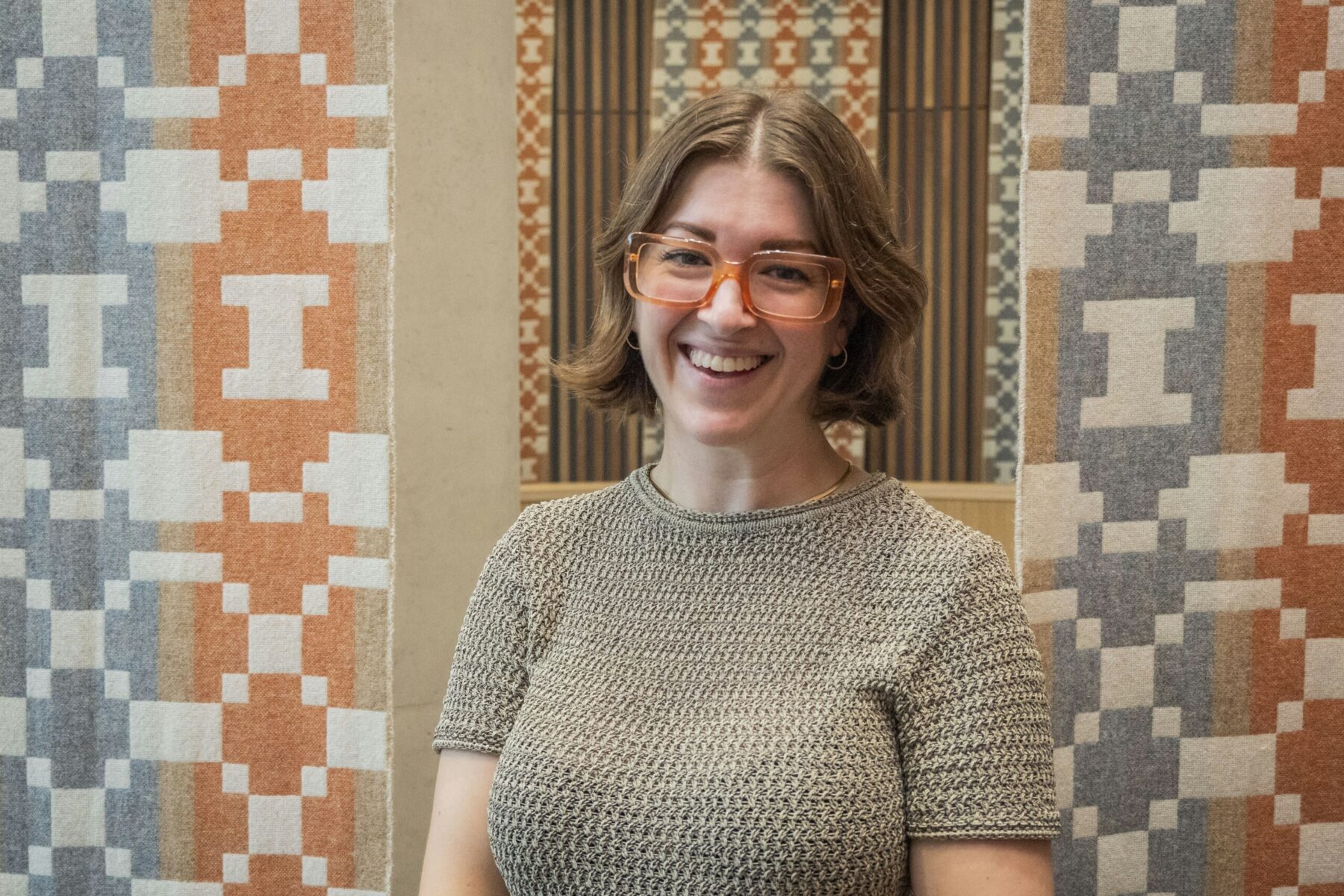
Ellie Shipman. Photography by Martha Crean
Shipman is a familiar face at Spike Island. As a Spike Island Associate, she has presented installations as part of Open Studios, including Hanging in the Balance in 2025, and has worked directly with Spike Island audiences through our I Am Making Art programme. Her 2024 workshop Hidden Stitches explored women’s labour through textile-making, inviting participants to create their own quilt panels.
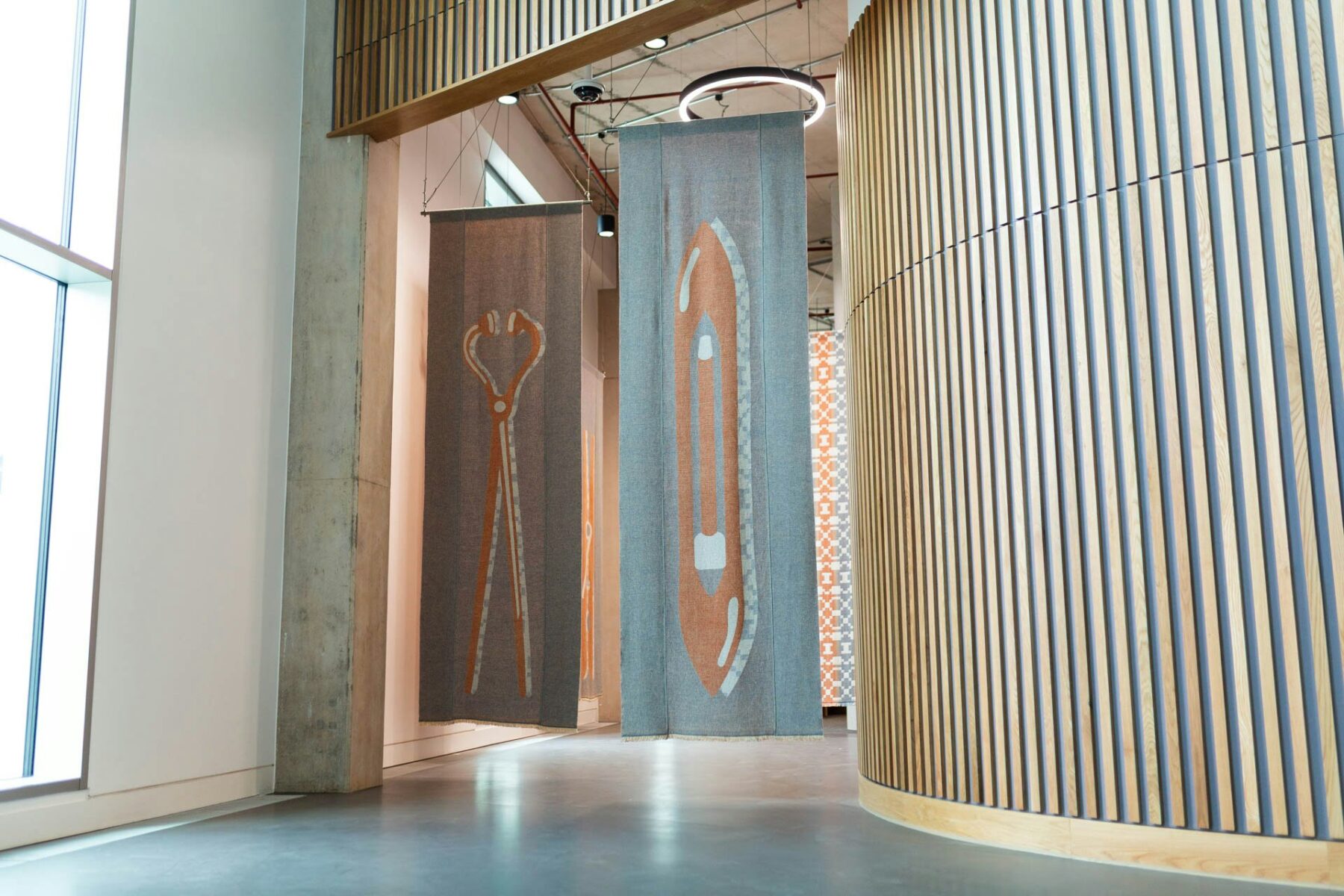
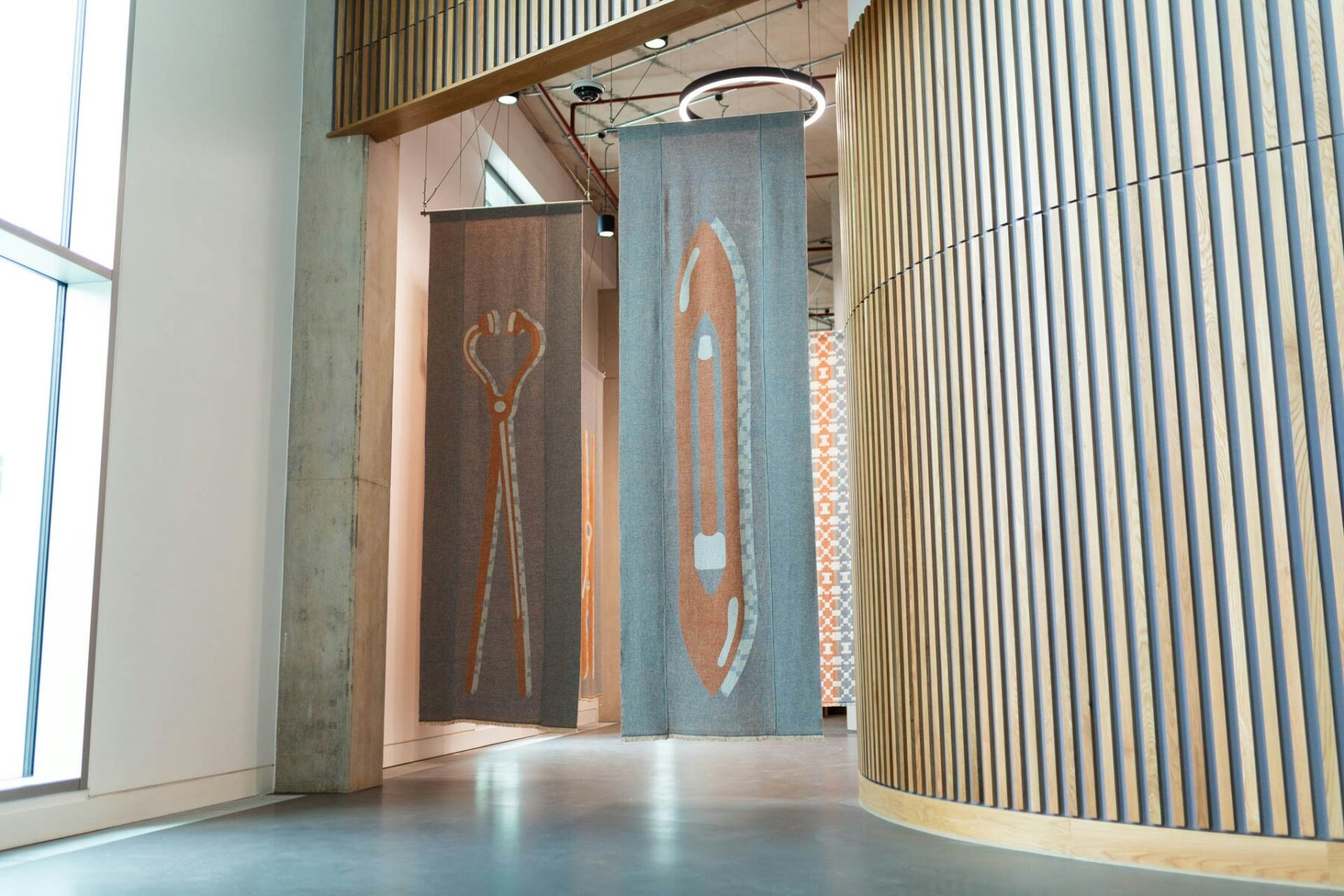
For Temple Quarter’s new social space, the Story Exchange, Ellie has created Soft Monument. The piece is a permanent textile artwork made from British wool and mild steel, Soft Monument consisting of 14 large woven panels. The work reflects on the often-unseen labour of women, tracing connections between domestic work, industry and the histories of East Bristol. Its forms evoke weavers, welders, seamstresses and domestic workers, while repeating geometric patterns speak to the rhythms and cycles of industrial production.
The work is the culmination of Charting Change, a two-year public art commission exploring the industrial histories of the Temple Quarter site alongside its technological futures. Led by Shipman, the project brought together local people, artists, community groups, industry partners and researchers through workshops, exhibitions and temporary artworks. Spike Island Exhibition Services undertook the hanging this monumental work comprising fourteen, 4m long textiles.
The design of these panels developed through two years of working with residents, university staff and students and local women-led fabricators – welders, weavers and tailors.
I was interested in exploring how women have shaped industry historically and currently in Barton Hill, where I am also a resident, and the hyper local area around the Temple Quarter Enterprise Campus site. I worked closely with Barton Hill History Group – a font of knowledge and incredible stories of local history – and together with Programme Artist Jack Stiling we put on exhibitions, held welding workshops for women over 60 with WTF Workshops, worked with the university’s historical printing press Bristol Common Press to create collaborative letterpress posters and playful engineering workshops for families at Barton Hill Microcampus amongst many more events and activities.
—Ellie Shipman
Ellie Shipman, 'Soft Monument' (2026). Courtesy the artist. Photography by Lisa Whiting
Wood & Harrison: 'We Apologise for Any Inconvenience Caused'
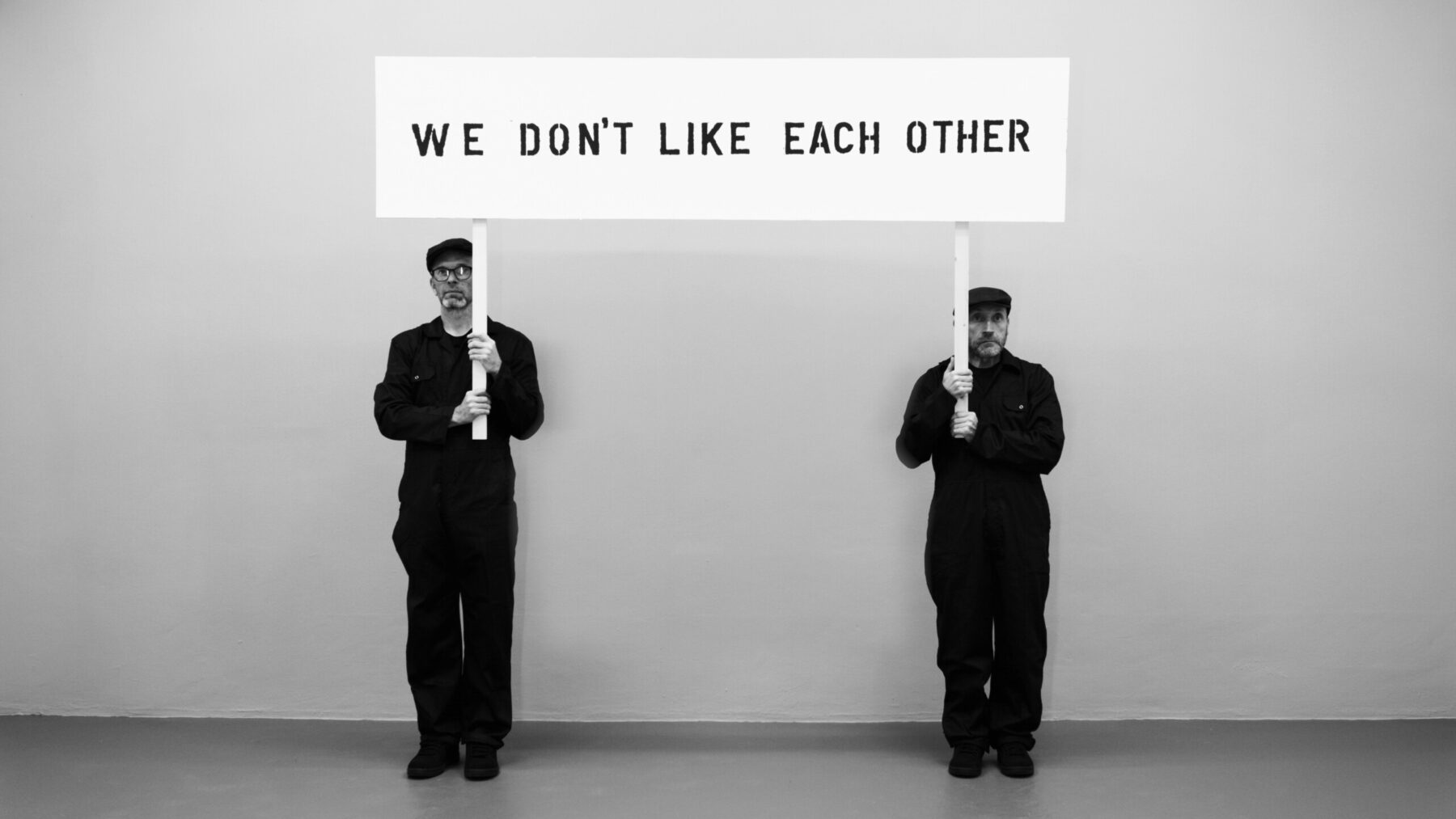
John Wood and Paul Harrison. Courtesy the artists
Also installed at the new campus is We Apologise for Any Inconvenience Caused by Spike Island Studio artists John Wood and Paul Harrison. The duo have worked together since 1993, producing video, sculpture, photography, drawing and installation that combine formal experimentation with a characteristic sense of humour and absurdity.
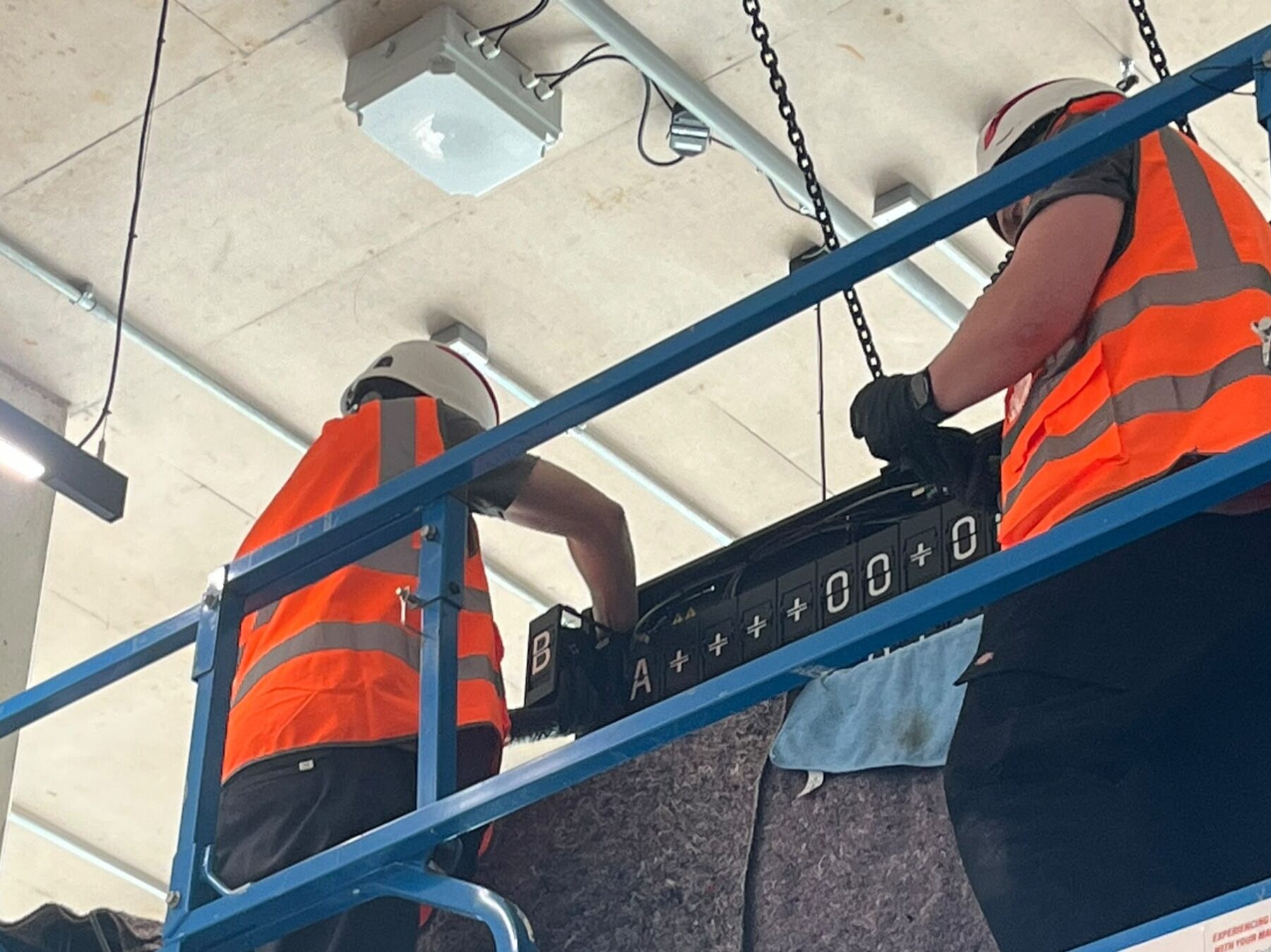
Custom built by Oat Foundry in Philadelphia, the board combines modern technology with old-school analogue functionality. At 3.5 metres wide and weighing half a tonne, it presented the Spike Island Exhibition Services team with three main challenges: First, they had to assemble the board from crated parts, including 624 alphanumeric module blocks. Second, they had to raise it and hang it from overhead suspension that would hold safely for at least twenty-five years. Finally, they had to make it operational and permanently connect it to an internet portal, so its constantly changing signage could be controlled remotely.
The work we’ve made – Apologies for any inconvenience caused – doesn’t really look like art. Maybe it isn’t actually art, we hope it is, but it might not be. Some people will see it and think ‘that’s a bit of art’ others, ‘that’s definitely not art’. Some people won’t even notice it, others may feel the need to write to the local paper.
There are 365 words, one for every day of the year. Some are about the sign itself, about language, about displaying information or instruction in the broadest sense. Some texts take what you’d imagine could be on an information board and slightly shift the emphasis. Others are things you wouldn’t expect to see at all, but which relate to the context of the university or the railway station. We’re not filling it with prose but finding ways to break language down into that structure, thinking about ambiguity, humour, duration, rhythm, the way one sentence gives way to the next.
—John Wood and Paul Harrison
Wood & Harrison have an especially longstanding connection with Spike Island. The pair have been studio holders at Spike Island for many years, developing their practice within the building and contributing to its community of artists.
Spike Island Exhibition Services installing 'We apologise for any inconvenience caused'
Room 13 Hareclive: 'Wild Spaces'
Alongside these permanent artworks, the Temple Quarter project also included Wild Spaces, an 18-month commission awarded to Room 13 Hareclive. The artist-led collective, which has worked collaboratively with children and adults in Hartcliffe for over twenty years, turned its attention to the relationship between the new campus, the city and its natural environment.
Room 13 Hareclive also has a long history with Spike Island. The visual arts studio was originally based in our building until 2007, when they moved into a purpose-built studio based on the grounds of Hareclive Primary School. In recent years, Spike Island has worked with Room 13 on a series of Engagement Fellowships in partnership with Hauser & Wirth, including Ecotones by Florence Fitzgerald-Allsopp in 2025, and the upcoming Should we plant a tree? by Joe Lyward in 2026.
Taking the River Avon as a starting point, the collective explored waterways as spaces of connection — between people, places and non-human life. Working with children as equal partners in the creative process, Room 13 undertook research, river journeys and conversations with University academics, developing drawings, characters, poetry and a publicly screened film around questions including: What is a river? Is a river alive? The project has thusfar produced Rivers – A Race Against Time, a film tracing the life of a river and its animal inhabitants.
 Donate