Each year, Spike Island offers fellowships to promising emerging artists selected through an open call to graduating students. Fellows are awarded a studio at Spike Island for one year, giving them space and support to develop their professional practices within Bristol’s vibrant artistic community.
As the 2025–26 cohort come to the end of their fellowships, we caught up with them to ask a few parting questions.
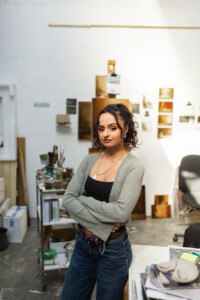
Portrait of Nahraine Al-Khafaji (2026). Photography by Lisa Whiting, image courtesy Spike Island
SI: What has been your favourite moment during your time as a Spike Island Graduate Fellow?
NA: My favourite moment during the past year as a Spike Island Graduate Fellow has been meeting Michael Simpson for a one-to-one studio visit via the visiting artist’s programme. Having admired his paintings for years, it was a valuable opportunity to speak with him and receive his thoughts on my practice.
I took a unique sense of encouragement from his words. The most memorable part of the talk was his stance on what it means to be a painter, which I now return to every time I paint.
SI: What has your Fellowship enabled you to achieve this year?
NA: The fellowship has given me the space and support to continue developing my practice within a diverse community of artists. Working around both other graduate fellows and established artists has led to continued conversation and perspectives. I am grateful to have been able to become part of this community.
I have benefited heavily from the access to on-site workshops and facilities, social events, and one-to-one’s with both Spike Island curators/staff and visiting artists throughout the year.
SI: Tell us about an artwork you’ve created during your Fellowship that you’re proud of.
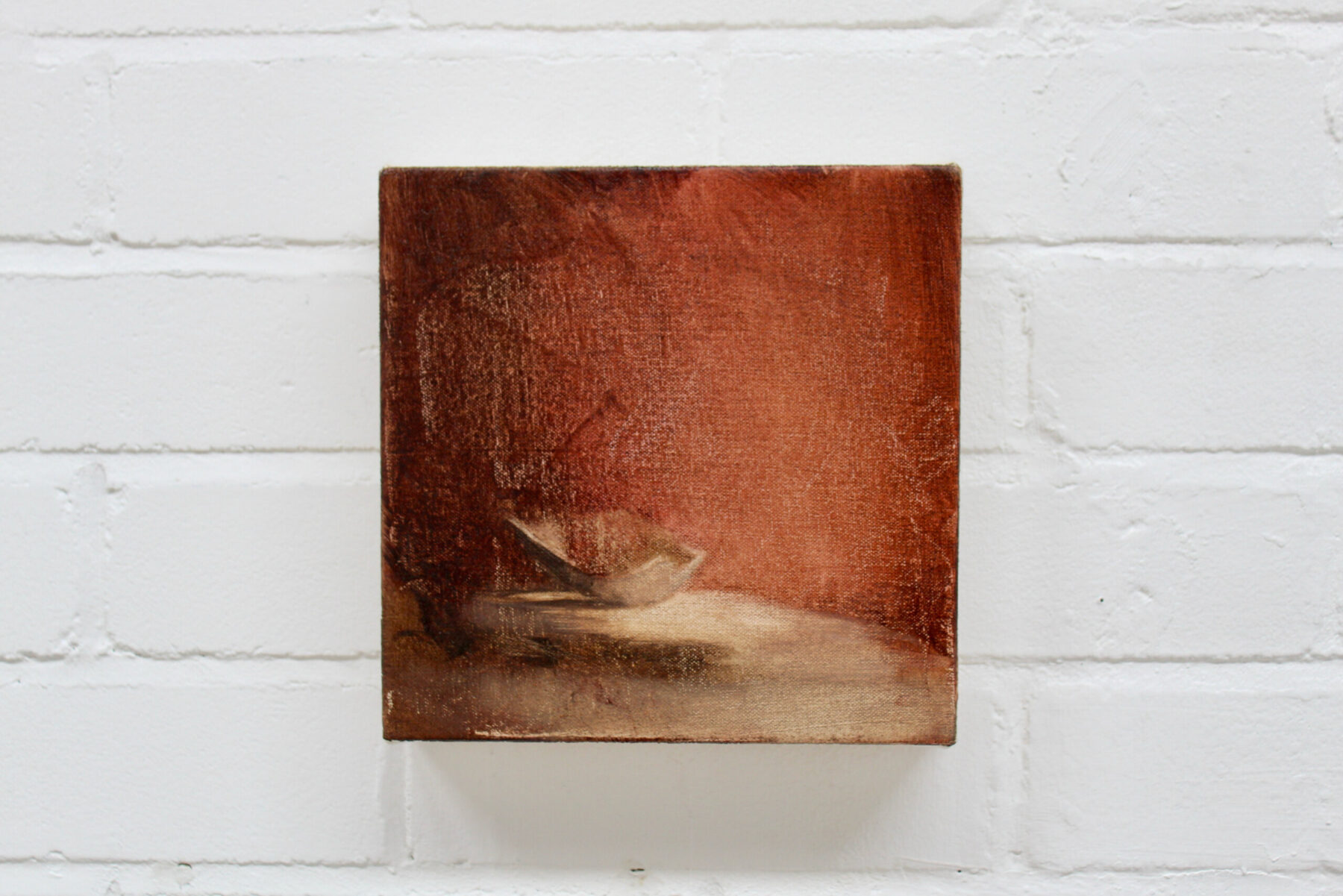
NA: Hawaa brings ‘Near Eastern’ archaeologies together into a constructed still life. It bridges personal memories of childhood with historical pasts, holding a tense scene of artefact-like objects that reflect on loss and destruction.
The painting mourns the ongoing conflicts in Lebanon. My memories of growing up around fragmented landscapes of ancient and recent fallen architecture now mirrors the current state of many of Lebanon’s cities. I situate this alongside my ongoing research of my ethnic home of Iraq, reflecting between its conflicts of recent decades and Lebanon’s current war.
I’m interested in how shards and fragments remain evidence of something once whole. Depicting them within a complete painted surface becomes my attempt to restore a fractured narrative.
The physical process of painting becomes cyclical in ‘Hawaa’, where constant scratching away at the surface before re-appling repeats until the composition feels resolved. The surface carries traces and records of previous gestures, therefore holding permanent reference to its past existences.
SI: What are your intentions and aspirations following your Fellowship?
Following the Graduate Fellowship, I have multiple exhibitions and collaborative projects coming up that I’ll be working towards, while continuing developing my personal practice.
I plan on further exploring the directions found in recent work, as well as building on the opportunities and relationships made possible by the Spike Island Graduate Fellowship.
Instagram: @nahraine.alkhafaji
Website: www.nahraine.co.uk

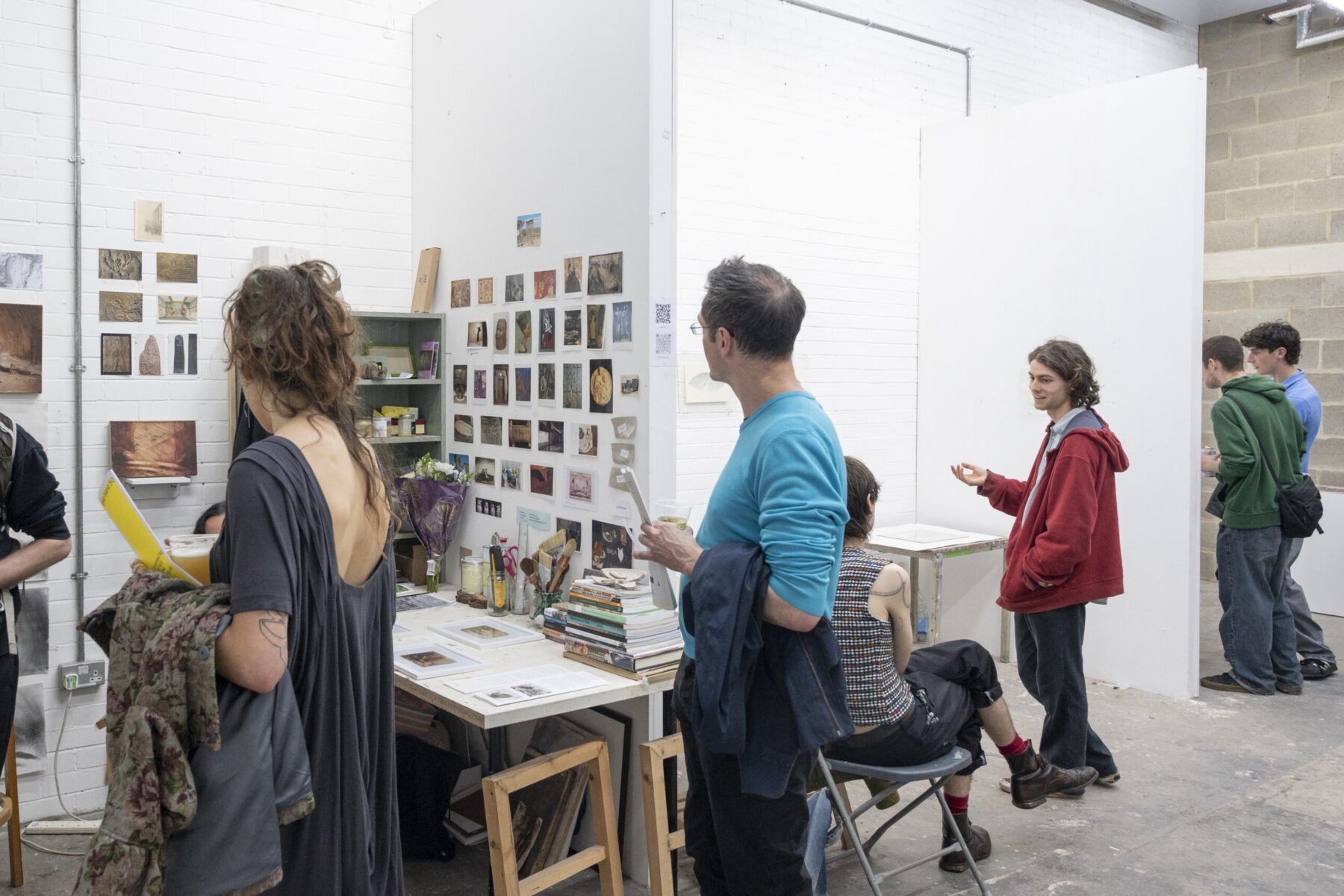
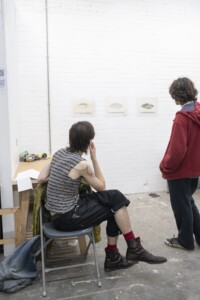
Studio 26, Spike Island Open Studios (2026). Photograph by Lisa Whiting, image courtesy Spike Island
SI: What has been your favourite moment during your time as a Spike Island Graduate Fellow?
WH: I got a lot out of the mentorship. Some conversations with Harriet were incredibly helpful in finding out what I like most in my work and where I can take it. This went beyond superficial ‘criticism’ and I feel very inspired.
SI: What has your Fellowship enabled you to achieve this year?
WH: I think mostly it has just been an environment to sit with ideas and just be surrounded with other artists. Nicky has also been so great in helping with future applications. I can put a lot of pressure on myself but it has been the best when I am just having good conversations and experimenting. With that I was able to think about what I really want from my work.
SI: Tell us about an artwork you’ve created during your Fellowship that you’re proud of.
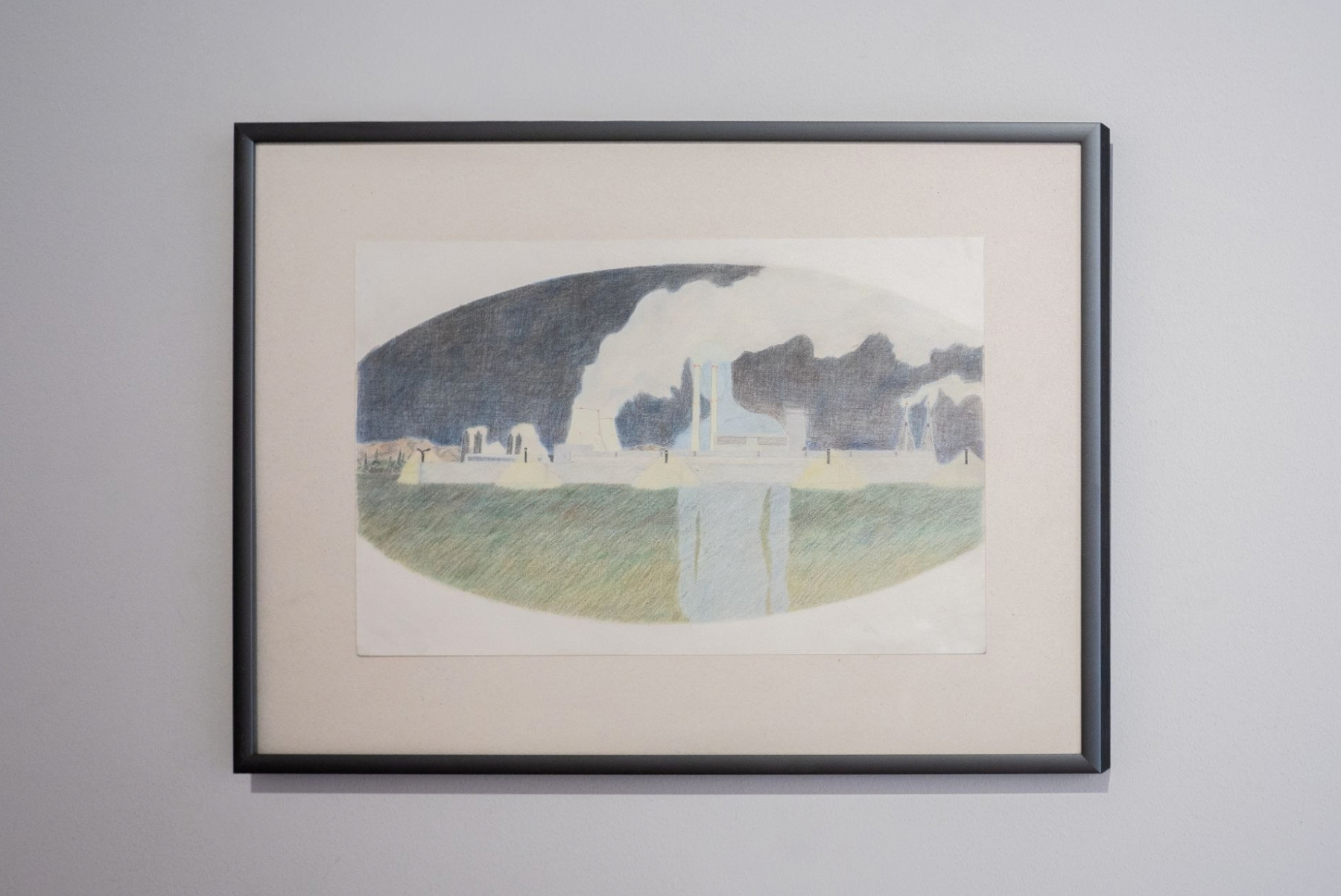
WH: This work came from this image I had in my head of a serene ghost which is also kind of terrifying, just hovering above a factory. It is connected to the factory and industry (and in that sense the infrastructures which sustain our lives) but it is also very uninterested, almost emotionless. I think I was drawn to this idea because it seemed to conjure this idea of our economies becoming almost autonomous, in doing so escaping us, they neither serve us or are concerned with our wellbeing. I think that contemporary, globalised systems have this kind of threatening immateriality to them (especially as we enter data capitalism) while obviously still being reliant on the material realities of bodies and resources to be exploited.
I was interested in how it’s kind of impossible to grasp these kinds of systems fully but how they still flood our lives and emotions. In this way our infrastructures are creating ghosts of their own. I also wrote a short story which emerged from this image which I like a lot.
Contact: w.j.hilless@gmail.com
SI: What are your intentions and aspirations following your Fellowship?
WH: I have written a short film script and am hoping to get it made next year. I am also looking to explore video more in general and also play around with some sculptural things. I am vaguely looking to continue my studies back in Germany but that is a long process. I will be ok as long as I can retain a community and the time to learn.
 Donate