From 19 June to 19 September 2027, the British Art Show 10 (BAS10) will be coming to Bristol, hosted by the Spike Island alongside venue partners Arnolfini, Bristol Museum & Art Gallery, and RWA.
Curated by Eko Eshun, the exhibition will showcase some of the most exciting art produced in the UK over the last five years, aiming to “make us think about how art can challenge fears of otherness and difference.
As part of BAS10, a city-wide Fringe programme is planned. Creatives across Bristol will be invited to showcase their practice through pop-up exhibitions, installations, and events.
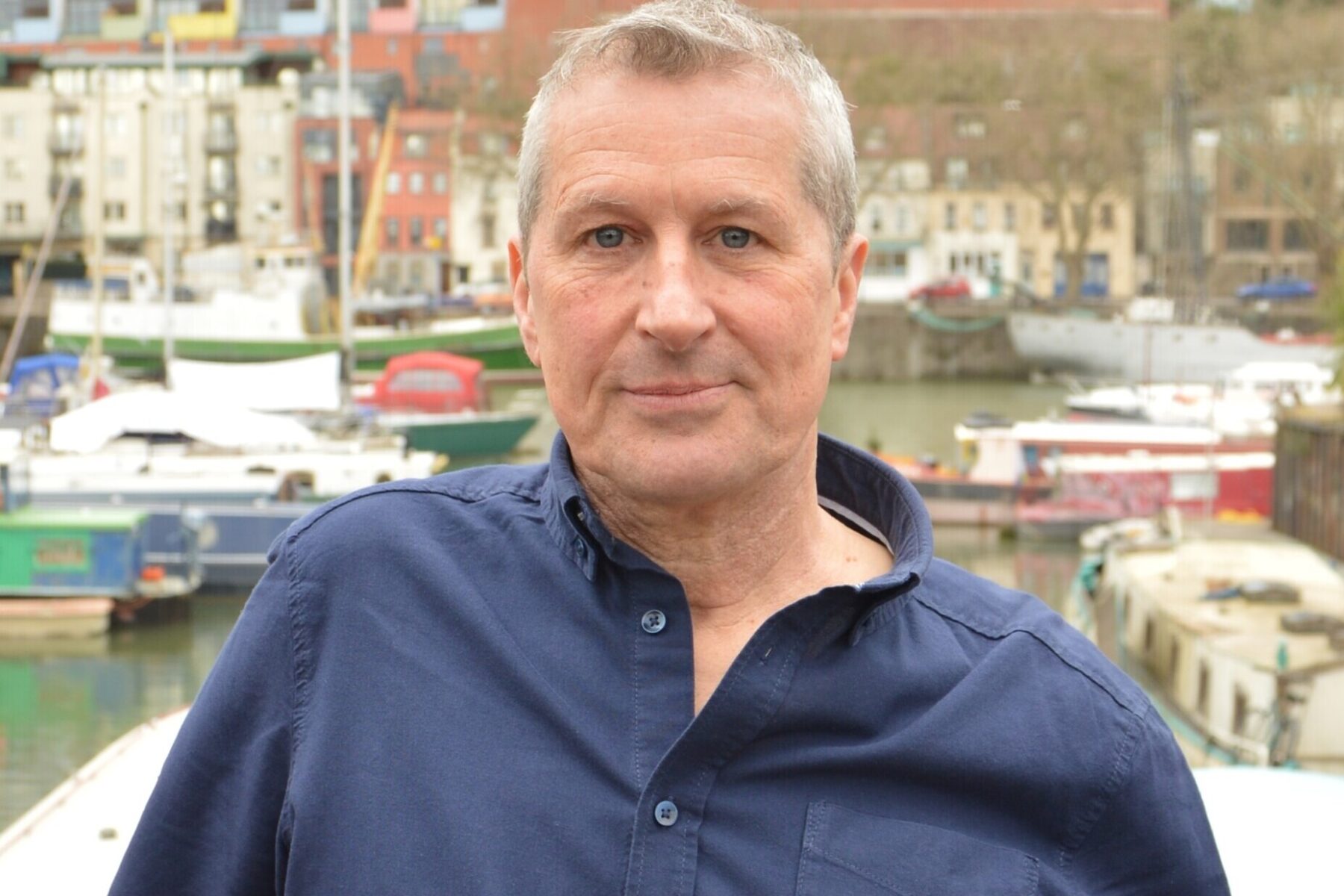
This won’t be the first time Bristol has hosted a city-wide Fringe. In 2006, as part of BAS6, Spike Island Studios artist and founder of Art in Motion (AIM) Colin Higginson presented work in the Fringe programme. We caught up with Colin to find out more about his experience and his hopes for BAS10:
Interested in submitting an event, exhibition, or activity for the BAS10 Fringe?
The BAS10 Bristol partners will share the official call-out and digital submission form in October 2026. To stay up to date with the latest BAS10 news, sign up for our newsletter using this form.
To find out more about British Art Show 10: A Chorus of Strangers which comes to Bristol in June 2027 click here.
- Can you tell us about your previous involvement with British Art Show?
I was involved in the British Art Show 6 in 2006. Bristol’s art scene was quite different then, although the same main venues were involved. There were also a number of smaller independent galleries that no longer exist, so contemporary art galleries were more spread across the city.
I was one of several artists commissioned for the Fringe programme. I was part of a cohort organised by the artist collective Plan 9, who were very active at the time, producing exhibitions and events across Bristol. They proposed an exhibition called Wig Wam Bam! at Red Lodge Museum, part of Bristol Museums.
One thing that really strengthened the project was the selection panel. They invited Marcus Coates—who later became my mentor—and Clare Barclay, both of whom were exhibiting in the British Art Show, to help select the artists. Having practising artists involved created a real bridge between local artists and the main exhibitions.
Alongside the exhibition, there was also a mentoring programme. For me, that was one of the most valuable aspects. I asked Marcus Coates to mentor me because I felt he had connected with my work during a studio visit. We continued working together for a couple of years after the exhibition, and so much grew from that relationship. It wasn’t simply about networking—it was artists meeting artists, and that made a huge difference.
- What do you remember as being the standout aspects of BAS6 when it last visited Bristol?
What I remember most was seeing contemporary art across the whole city. It felt like Bristol had become one large exhibition, and that was incredibly inspiring.
I also travelled to Newcastle to see the BAS6 exhibition at the Baltic. It had a completely different atmosphere there. Seeing how the same exhibition shifted from city to city was fascinating. I’ve always been interested in how context changes the way work is understood and experienced. Above all, I remember seeing an incredible range of work.
- Looking back at your experience with the BAS6 Fringe programme, what made it feel like a genuine part of British Art Show rather than a separate or secondary event?
We felt fully integrated. We were included on the website, in the programme and listings, and although we had our own catalogue, we felt part of everything that was happening around the British Art Show. We were invited to events alongside the main programme, and the mentoring was a particularly important part of that experience.
What mattered most was that opportunities continued beyond the exhibition itself. It wasn’t something that simply came and went—it created relationships, collaborations and opportunities that lasted long after British Art Show had left the city.
- British Art Show 10 aims to strengthen Bristol’s visual arts ecology and leave a lasting legacy beyond the exhibition itself. What do you think Bristol’s art scene is needing in this moment?
I’m interested to see how the four partner organisations work together. They each have different priorities and ways of working, even though they’re all working towards a shared goal. It’ll be exciting to see not only how those partnerships develop, but also how they connect with artists and organisations across the city.
Bristol has been missing independent spaces. We’re beginning to see new galleries such as Kit Form emerging, which is something the city has needed for a long time.
British Art Show presents a real opportunity to strengthen partnerships. Rather than organisations working in isolation, there’s the potential for much greater collaboration across Bristol’s visual arts sector.
- What role do you think a Fringe programme can play in strengthening Bristol’s creative ecosystem?
A Fringe programme can recognise and celebrate everything that’s already happening across the city. Naturally, much of the funding and attention goes to larger institutions because they have the capacity to deliver major exhibitions. But there’s an enormous amount happening at the grassroots level that often isn’t as visible.
The same is true of accessibility. Rather than larger organisations trying to work out accessibility on their own, there are already organisations with significant experience that can help shape and lead that work—not just AIM, but many others across Bristol.
British Art Show offers a chance to highlight the breadth of creative activity that’s already here and bring greater visibility to it.
- Accessibility is a key priority for BAS10. In your view, what does meaningful accessibility look like in galleries and visual arts organisations beyond physical access?
Accessibility isn’t just about getting people into a building or providing information in different formats. For me, access is fundamentally about opportunity. If people want to be involved, they need genuine opportunities to participate. British Art Show shouldn’t simply make application forms accessible—the opportunities themselves need to be accessible.
Learning-disabled artists, for example, often work in very different ways and may not fit those expectations. Meaningful accessibility means creating opportunities where people can engage on their own terms. It’s about how opportunities are designed, who they’re intended for, and who gets access to them. That applies across everything, from commissions and exhibitions to funding programmes.
Artists develop through opportunities. You don’t develop simply by working in the studio—you develop by exhibiting, collaborating and sharing your work. That’s true for every artist, but it’s especially important for those who have been historically underrepresented.
We’re beginning to see positive change, with learning-disabled artists receiving greater recognition through major exhibitions and awards such as the Turner Prize. It’s not about lowering expectations; it’s about recognising talent through a broader and more inclusive lens.
For me, access and opportunity are inseparable. I hope the wider programme around British Art Show creates opportunities that are genuinely open to as many artists, organisations and venues as possible.
- As Bristol prepares to welcome BAS10, what would success look like to you – not only for the exhibition itself, but for the city’s artists, communities and cultural organisations once it has finished?
I’d like to see stronger connections between Bristol’s many artistic communities. There are so many different groups and ways of working, but they don’t always come together. British Art Show has the potential to build those relationships.
I’d also like to see wider recognition of how rich Bristol’s artist community really is, because so much of it remains invisible.
Most importantly, I’d like to see more opportunities for people who are underrepresented. It’s always worth asking whose voices are missing, because there are always artists who aren’t being heard. I’d like to see more risks taken and more opportunities created for those artists.
- Do you have any early ideas of what you’d like to produce for BAS10 in Bristol?
We’ve already started developing several ideas.
AIM is part of a collective of supported studios across the five British Art Show cities, and together we’re developing a touring exhibition and exchange programme. AIM is also planning to publish artists’ writing from supported studios to launch during the British Art Show. Our writing group has already produced two books, and we’d like to build on that by creating a new publication inspired by themes emerging from the touring exhibition.
We’re hoping to revisit an earlier AIM project called The Tea Service. The idea is to host a large tea-and-cake creative event and public forum where people can come together for conversation. Discussions would be inspired by themes within the British Art Show, with a particular focus on disability, inclusion and representation.
Finally, we’re hoping artists from the supported studio collective in the other British Art Show cities will visit Bristol. That exchange between artists feels particularly important, and we’re excited to see what those conversations and collaborations might lead to.
 Donate