Guest Blog: A Short History of Artspace and Spike Island by John O’Connor
The following blog was written by John O’Connor, an artist, historian, and one of the core members of Artspace Bristol (now Spike Island) since the very early days of the collective. John is now the founder of the Museum of Totterdown, a project housed in a shipping container in the South of Bristol, shedding light on Bristol’s hidden histories.
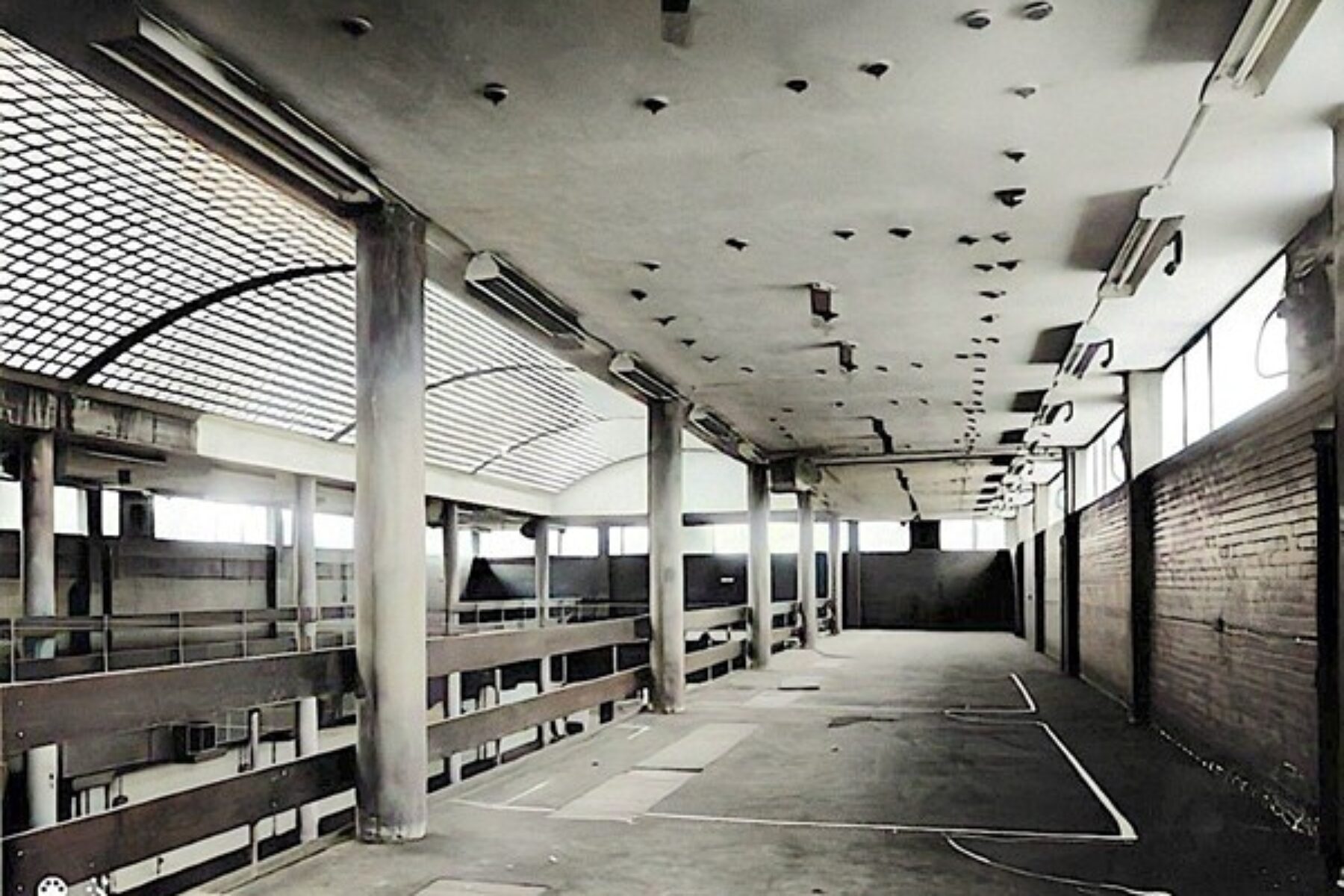
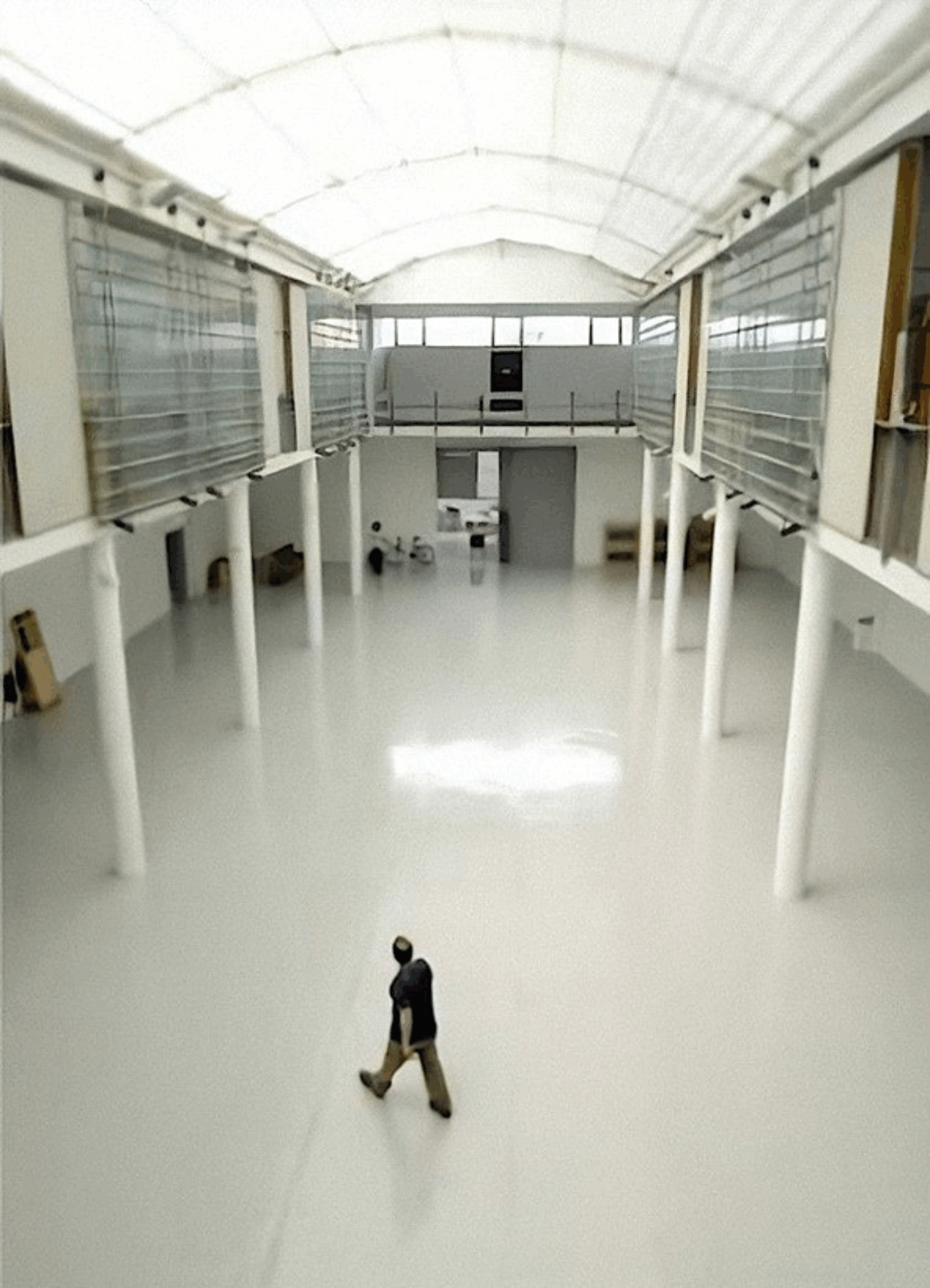
Spike Island is the product of a long chain of events that, at times, felt unpredictable, fragile and fortuitous but, ultimately, our arrival at this building; the Tea Factory, 100mtrs from our former home, had a kind of inevitable logic about it.
Though the artist-led movement is generally synonymous with the 1980s, things really began back in the late 1960s and early 70s.
Initially, it was the arrival of Space Studios at St Catherine’s Dock in London’s harbourside in 1968 that heralded a new approach to artist provision. Established by Bridget Riley and Peter Sedgley with funding from Henry Moore, the concept of an artist studio collective had an irresistible lure. There were a number of factors coming together at this time that made the proliferation of studio projects almost inevitable.
Across the country, port cities saw a move away from labour intensive ‘manhandling’ of goods in and out of bonded warehouses toward deep water container-shipping harbours. Containers were their own warehouses and so, in cities from Glasgow to Cardiff, Liverpool to Bristol, dock-side buildings were lying empty, abandoned and un-loved. Leases could be negotiated for knock-down prices and huge ‘economies of scale’ could be made by forming co-operatives or collectives and ‘divvying up’ floorspace.
Secondly, the working practices of artists had also shifted, and painters, in particular, were being inspired at this time by East-Coast, US, large scale abstract ‘Field’ and ‘Action’ painting, using wet acrylic paint on copious amounts of unstretched canvas laid out across the floor. Floor space was now at a premium as, unlike oil painting, it was not possible to work on wet acrylic, so floors had to be of a sufficient size to work on a number of canvasses at once. These cheap, damp, draughty, industrial spaces fitted the bill and not just for practical reasons. All kinds of group economies could now be made in the purchase of materials and equipment; canvas, pigments and copolymer medium could be bought in bulk and internally distributed. A wide range of machinery and equipment for processes such as printmaking, sculpture and ceramics etc could now be shared for a fraction of the capital cost.
However, the most significant aspect of studio collectives was what they gave artists in terms of visibility and voice. Space created AIR (Artists Information Registry), an artist’s slide database, plus Art Service Grants, an accessible visual arts charity and the Air Gallery, an artist-led showcase.
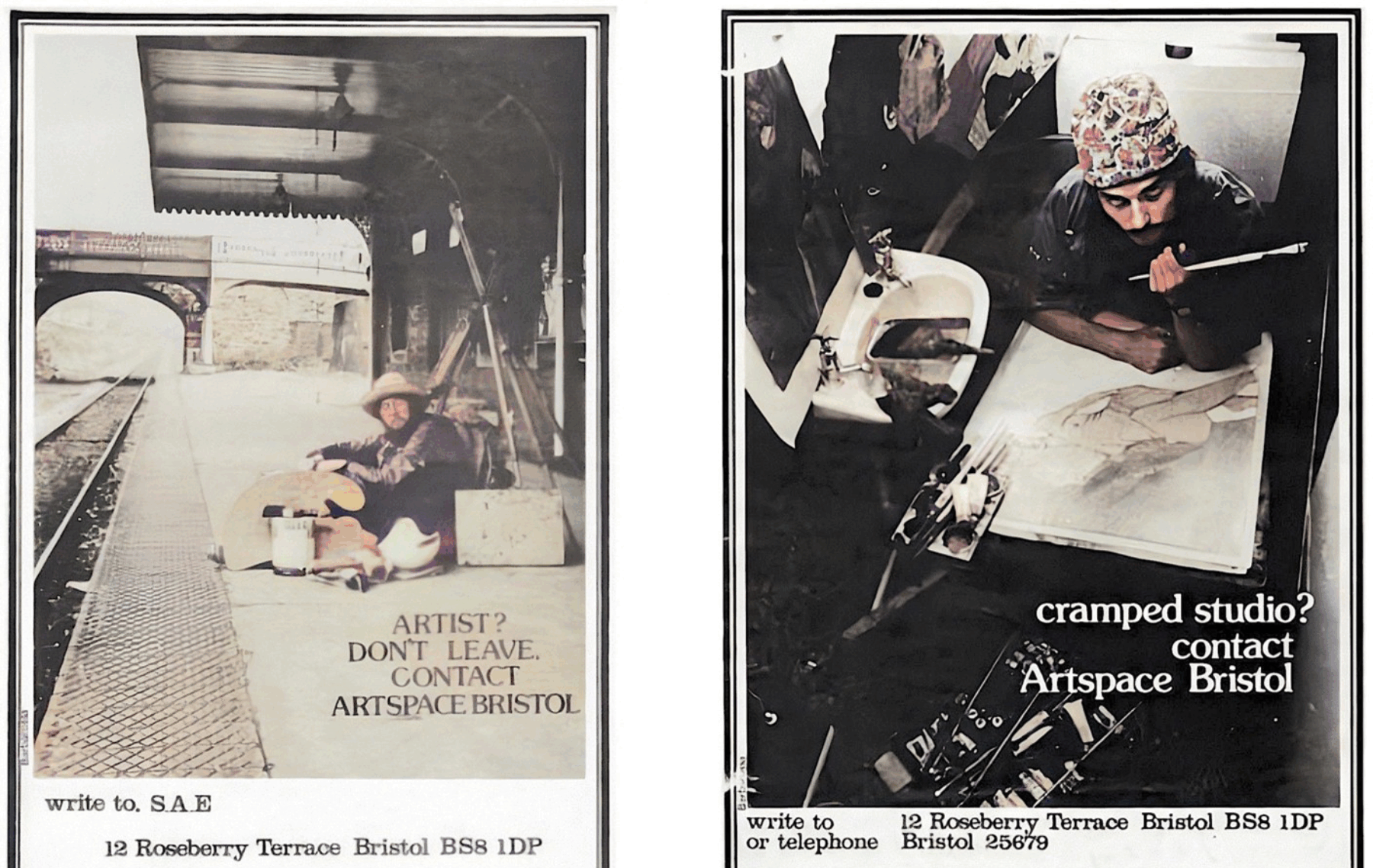
It was Art Service Grants that supported and enabled the creation of Artspace, Bristol in 1976, by providing all the legal and constitutional templates to form a limited company and get the project going.
So, the call was put out and the first tentative steps were taken, four arts projects came together to take on the licence of a top-floor warehouse in Gas Ferry Road in Bristol’s harbourside.
The founding groups were Artspace Studios, Bristol Printmakers Workshop, Avon Touring Theatre and the Bristol Filmmakers Co-op (who were one of the contributors to the founding of the Watershed).
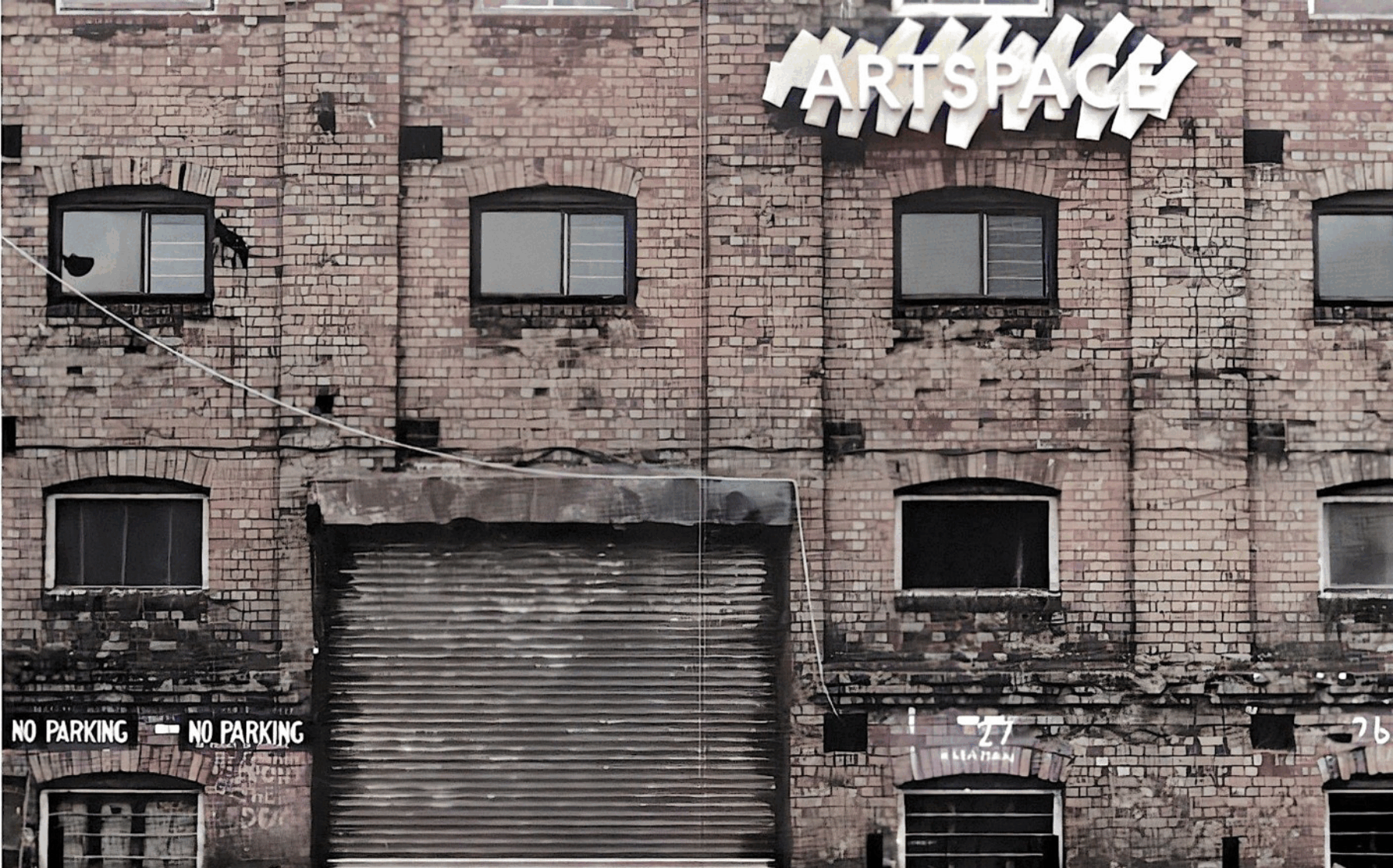
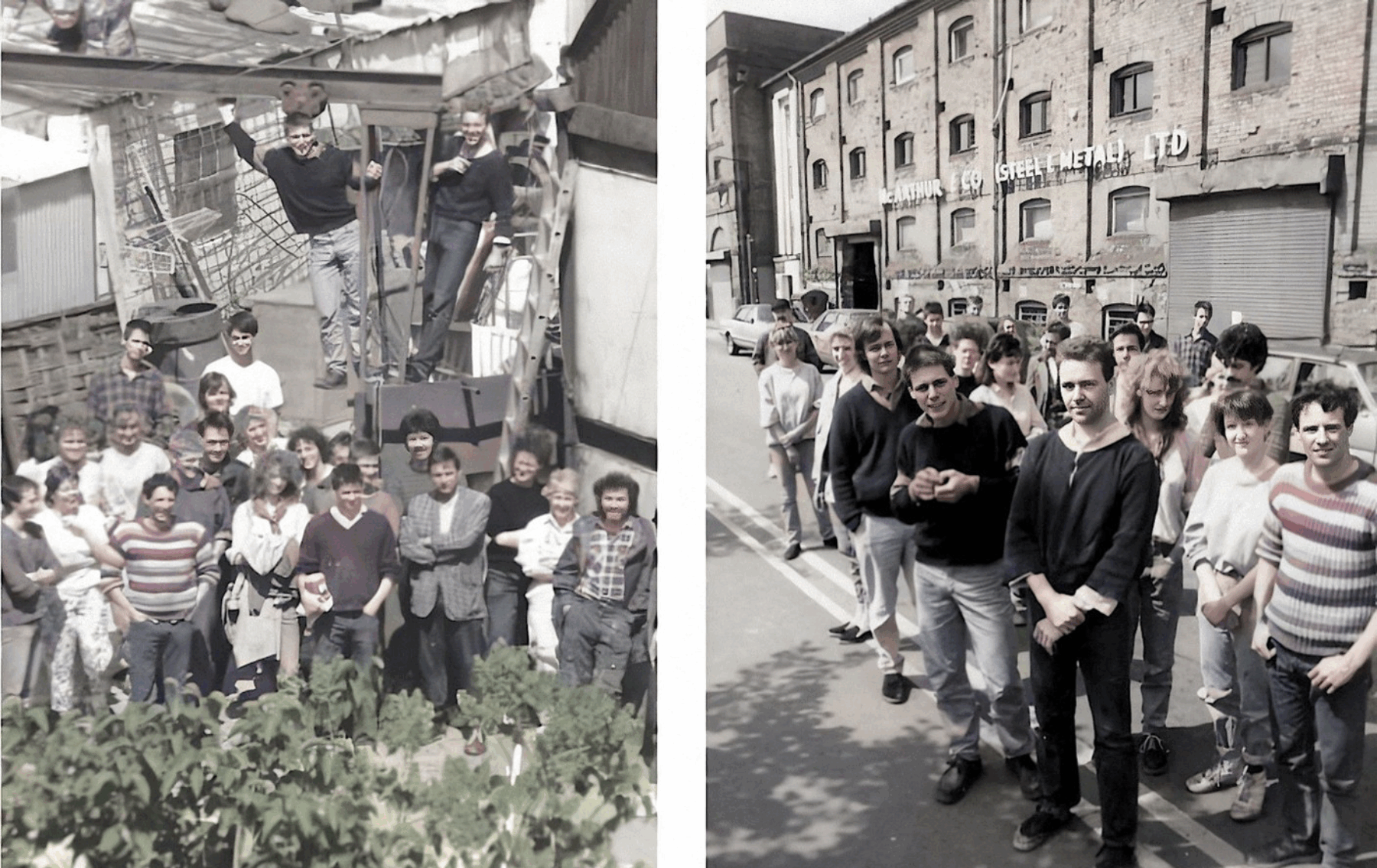
Although the seed of Artspace Studios had been planted in 1976, in the old McArthur’s, warehouse, it was not plain sailing and things stuttered and struggled along for a number of years, the culture of shared space was not yet a thing and there was rarely a full quota of artists to pay the ground rent.
Then Margaret Thatcher came to power and the world changed virtually over-night. This was an inhospitable time to be a struggling artist and what little support there was dried up. Unemployment rocketed and post-graduates, arriving onto a non-existent job market, decided that they may as well be an unemployed artist. The membership of Artspace quickly expanded from 12 to 50 to 80 to 130. Studios expanded further into the McArthur building; The Sculpture Shed was established, followed by Top Floor Studios, Gas Ferry Studios, Sublime Studios and Transfex, all under the umbrella of Artspace. Other studio projects also mushroomed across Bristol and at one point there were 15 artist groups operating out of the city.
After growing interest by developers in Bristol’s picturesque harbourside, our tenuous hold on the McArthur building began to come under threat and we felt the need to start looking out for a ‘plan B’.
The campaign to find a new permanent home really only began in earnest in the mid 80s when the Gas Ferry Road site was bought by a property developer and our eviction, at that time, seemed imminent. However, due, in part, to a well-timed banking crisis, the planned re-development was delayed, and our campaign dragged along for more than a decade. This was much, much longer than any of us had bargained for, but it did allow the time that we needed to fund-raise, publicise and create art and education programmes, including 4 gallery spaces, an international exchange and residency programme, public art initiatives and artist-in-schools schemes – while constantly lobbying Bristol City Council to give us access to one of their un-occupied buildings.
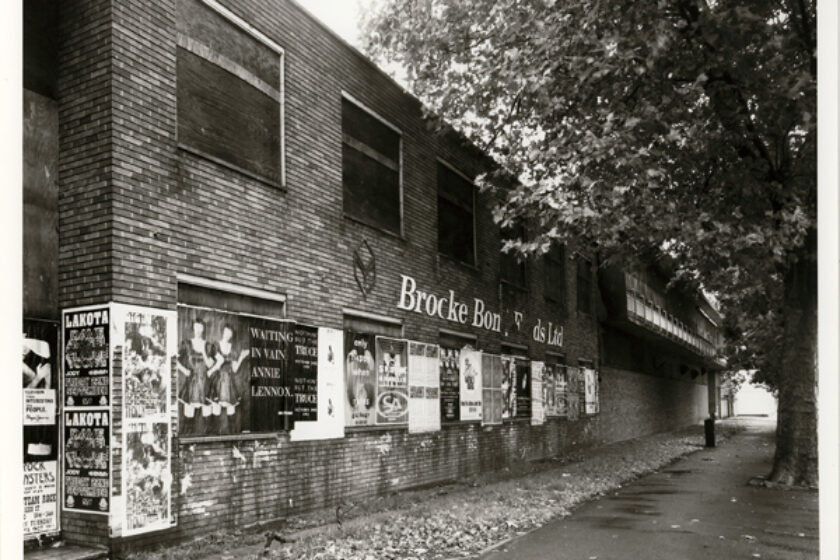
We embarked on a warehouse ‘goose chase’, pursuing over 20 different sites, some tantalisingly close to realisation, but with every setback leading to an increase in ambition and scale. So much so, that this, the final building, at the former Brooke Bond tea factory, was 20 times larger than the first one that we produced feasibility plans for.
So, how we presented our case to the city, to funders and to the public evolved and changed as we worked our way through a very steep learning process.
We cultivated public support, attracted friends and advisors, we assembled a fantastic team of professionals with experience and expertise in finance, architecture, project management, fundraising and negotiating and we took on our first members of staff.
During this period, the political, economic and cultural landscape that we were operating against also underwent seismic change.
At the beginning, we were still in the throes of the Thatcher government, which was not a great period for the arts, and, at times, things felt unreasonably hostile. Everyone seemed to be under pressure to justify their existence and to quantify and qualify what they did in simplistic economic or commercial terms. Outside of London, there was little in the way of an arts infrastructure and contemporary visual art in particular seemed to fall off the agenda. We were left to our own devices. Ironically, this manifested itself in an out-poring of ‘artist-led’ initiatives throughout the country, as artists themselves were trying to piece together a kind of DIY strategy for the provision of basic needs.
I think we felt frustrated that we were not making a strong enough public case for the more intrinsic and inherent values of art at a human level, which we felt was the real motivation for our project. Even if all the secondary benefits did not exist, surely art would still hold an important place in the life of a city. It had always been our approach to bring people directly into contact with artists in their studios, to cultivate support and understanding by ‘immersion’ and to reveal to audiences the integrity of the entire art production process.
We did, however, have one little moment of inspiration.
As the Lottery was becoming a reality, there were fears within the Arts Council that the new Capital Arts Funding may be perceived as a ‘Trojan Horse’ for wealth-transference from ‘less than well off’ lottery ticket purchasers towards middle income and high-earning ‘opera- goers’.
There was nervousness about negative media coverage, and they didn’t really much fancy the idea of a non-established artist-led project making one of the very first applications.
We had, by that time, raised £500,000 in cash and a similar amount in projected capital assets, which in those days was an unprecedented amount for an arts project, let alone for one that was ‘artist-led’. So, the Arts Council wanted to ‘forensically’ analyse our accrued monies with a funding audit of all the various donations and their respective terms and conditions.
They were most interested in our main funder and patron, a man called Peter Barker-Mill, who had donated £235,000. This was our first and most important donation and effectively ‘dealt us in’, so to speak. Peter was also the original funder and patron of the Arnolfini and as our ‘venture capital’ provider and ‘risk-taker’, his terms would have had a disproportionate say in the direction of the project and would ‘set the tone’ for the totality of future funding.
However, Peter had simply turned up one afternoon, had a quick ‘look-see’ around the studios, he was elderly and frail, so he didn’t get up the stairs to see everything and then, by return of post, sent us a check for our ‘first instalment’ of £100,000 with a comp slip saying; “Hope this helps you, good luck with the project” – and that was it, immense generosity without any fuss. We had not even asked him for money in the first place and we didn’t dare question why he had given it to us.
So, I approached him to ask if he could just put into some words what it was that he had seen in our project.
He replied back with a hand-written note, explaining that; ‘…he had been brought up to believe that the things that you make with your hands express and say something about your soul and that hand and soul were in some way connected as through a conduit linking them…and that in contemporary life, with mass production etc. people were making things less and less but, that he saw in our project something that inspired optimism within him.’
This letter was like an affirmation for the campaign team. We felt it gave us licence to be a bit more of who we really were. We were encouraged to express that we were here to help, inspire, energise and enrich the lives of artists and audiences and, that if we did that well enough, then maybe they, in turn, would inspire and enrich the cultural heart and soul of our city and would that not be an inherently worthwhile central objective?
Over the years we managed attract a broad network of friends, supporters and allies within Bristol, many of whom had no personal or direct association with the visual arts. But, nevertheless, felt able to contribute to a creative development process.
This support came to a head on the acquisition of the former Brooke Bond building here on Cumberland Road. As we had already produced business plans, architectural feasibility studies, surveys etc, our application to the Lottery was first in, though was expressed as no 5, just behind the Royal Opera House. We went too early, as at that time the terms for the ratio of partnership funding were pound for pound, so we were only able to apply for just under one million had we waited for a couple of months we could have applied for four times that amount. So, we were short of capital for such a vast building.
However, the artists and others turned up in their droves and took care of the demolition of existing plant-work, painting and decoration, building of partitions, installing of electrics etc. etc.
We had always been aware that what started as an incredible mobilisation of artist energy, inspiration and endeavour would evolve away from its collective artist-led roots towards an eventual ‘executive-led’ institution. This was always inevitable, and we knew it from the start. Artists could not be expected to devote their valuable ‘sweat equity’ time and energy indefinitely and needed to be able to return to the studio.
Peter Reddick was one of the driving forces and leading lights behind the Bristol Printmakers Workshop. He was a Quaker, and exuded kindness, vision and empathy towards Bristol’s community of artists. It was not necessarily in his honour, but we displayed a Quaker maxim from the 1800s on our office wall in the McArthur building; it read – ‘The idea creates the organisation; the organisation destroys the idea.’ It was a sobering reality check that was there to remind us to savour the moment – a unity of purpose and ownership on such an immense scale was not going to last, but we were determined to squeeze every last drop out of it.
Spike Island made sense because it was no longer just a Studio provider, or Education project or a Gallery, but more a conversation – a forum. Spike is as much a ‘software’ process as it is a ‘hardware’ product, and it remains difficult to fully describe or pigeonhole.
Developing a project like Spike is sometimes about survival and reacting to threat and sometimes it’s about flourishing and responding to opportunity. There is a constantly shifting concoction of subtle forces acting upon us in ways that we only ever really see with the benefit of hindsight. Meanwhile, artists, as always, will keep a watching brief and continue to be light on their feet, responsive and ready to act.
All text and images are courtesy of John O’Connor.
 Donate